
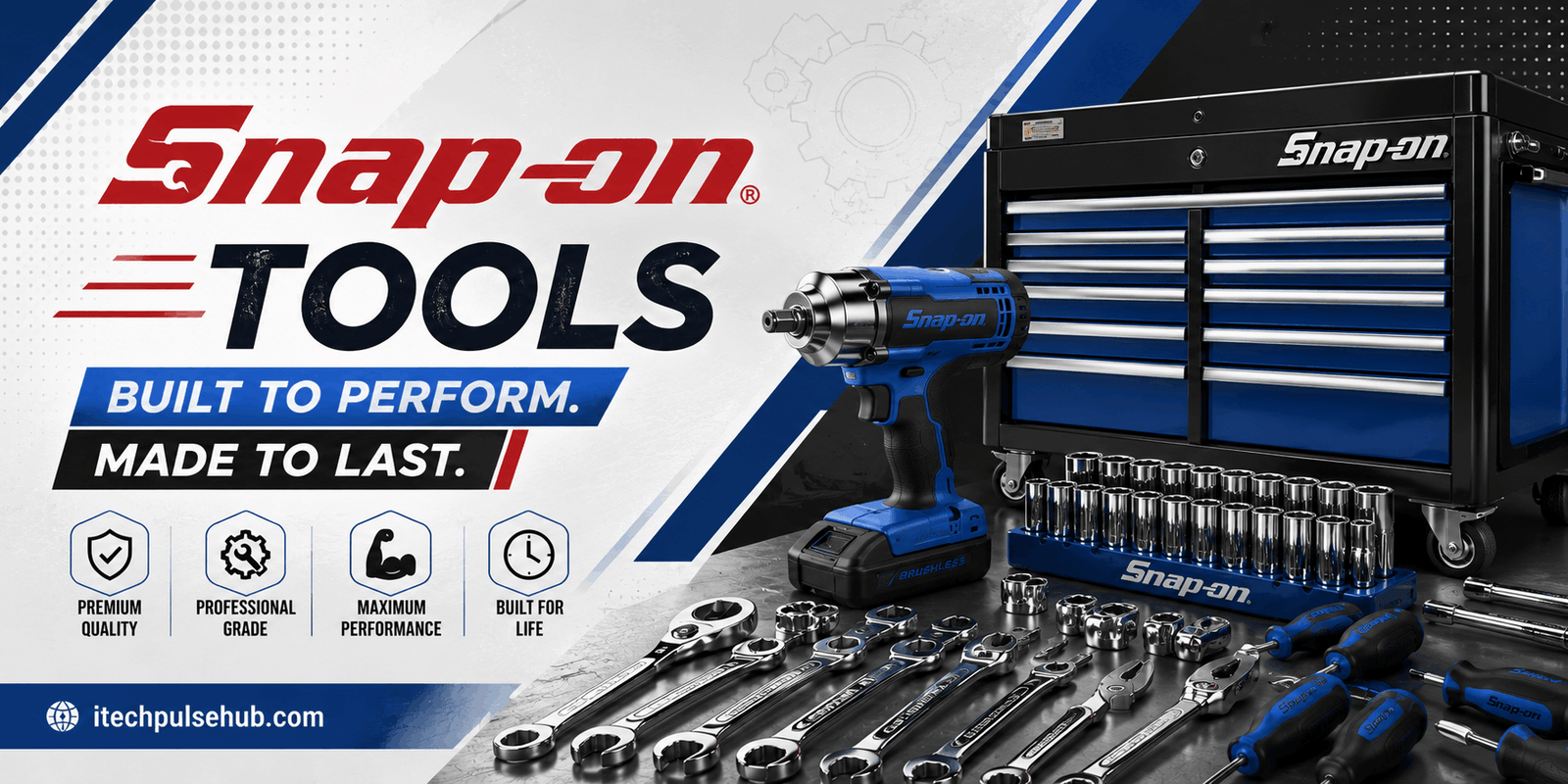
Snap-on Tools: The Complete Guide
Introduction
When professional mechanics, technicians, and serious DIY enthusiasts talk about the gold standard of hand tools, one name almost always comes up first: Snap-on. For more than a century, Snap-on has stood as a symbol of durability, precision engineering, and lifetime reliability in the world of automotive and industrial tools.
But what exactly makes Snap-on different from the dozens of other tool brands crowding hardware store shelves? This guide takes a close look at the company’s history, product range, pricing, and why professionals continue to trust the brand generation after generation.
The Origins of Snap-on Tools
The Snap-on story began in Wisconsin in 1920, when engineer Joseph Johnson and his colleague William Seidemann came up with a simple but game-changing idea. At the time, socket wrenches were built as single, fixed units — a mechanic needed a completely separate tool for every socket size. Johnson’s insight was to design interchangeable sockets that could “snap on” to a small set of handles, drastically reducing the number of tools a technician needed to carry.
Their original lineup consisted of just five handles and ten sockets, marketed under the memorable slogan “Five do the work of fifty.” That single innovation became the foundation of an entire company, and by 1923 the first official product catalog was published. Within a few years, the business had grown from a small workshop operation into a fast-expanding enterprise with dozens of branches and a traveling sales force that visited mechanics directly at their workplaces — a distribution model that remains central to how Snap-on operates today.
In 1930, the company relocated its headquarters to Kenosha, Wisconsin, where it remains based to this day. Over the following decades, Snap-on expanded well beyond hand tools, branching into diagnostic equipment, power tools, tool storage systems, and specialized solutions for industries ranging from aviation to heavy-duty trucking. Today, Snap-on Incorporated is a publicly traded company on the New York Stock Exchange and reports billions of dollars in annual revenue, reflecting just how far the original idea of interchangeable sockets has traveled.
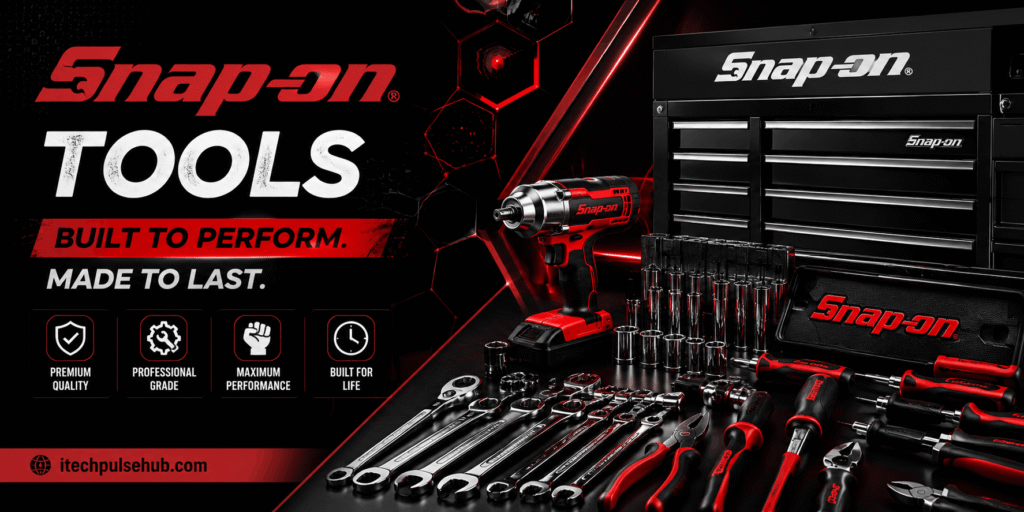
What Makes Snap-on Tools Stand Out
Ask any mechanic why they pay a premium for Snap-on, and the answer usually comes down to a handful of consistent themes.
Build quality and materials. Snap-on tools are manufactured using high-grade alloy steels and precision forging techniques designed to withstand years of heavy daily use. Wrenches, ratchets, and sockets are engineered to resist rounding, stripping, and metal fatigue even under constant torque in demanding shop environments.
The lifetime warranty. One of the most talked-about features of the Snap-on brand is its warranty policy on hand tools. If a covered tool breaks during normal professional use, it is typically replaced free of charge through the company’s dealer network. This policy has become such a defining part of the brand identity that many buyers consider it the single biggest reason to choose Snap-on over cheaper alternatives.
The mobile van dealer network. Unlike most tool brands sold primarily through big-box retail stores, Snap-on built its reputation on a franchise model where independent dealers drive fully stocked vans directly to repair shops, dealerships, and industrial facilities on a weekly route. This face-to-face relationship allows mechanics to physically inspect tools, get immediate warranty service, and access financing plans without ever leaving their workplace.
Diagnostic and equipment innovation. Beyond hand tools, Snap-on has become a major player in vehicle diagnostics, producing scan tools and software used to read error codes, calibrate sensors, and troubleshoot increasingly complex modern vehicles. As cars have become more computerized, this side of the business has grown into one of Snap-on’s most important product categories.
Popular Snap-on Product Categories
Snap-on’s catalog today spans thousands of individual products, but a few categories consistently stand out as customer favorites:
- Ratchets and sockets — widely regarded as some of the smoothest and most durable on the market, prized for tight tooth counts and minimal swing arc.
- Wrenches — including combination, flare-nut, and specialty wrenches built for tight engine-bay clearances.
- Torque wrenches — valued in professional settings where precise fastener tightening is critical for safety and warranty compliance.
- Tool storage — Snap-on’s rolling tool chests and boxes are iconic in auto shops, known for smooth ball-bearing drawer slides and heavy-duty steel construction.
- Pliers, cutters, and pry bars — built for the kind of repeated daily abuse that would quickly destroy lower-cost alternatives.
- Diagnostic scanners — professional-grade devices used for engine diagnostics, module programming, and vehicle system calibration.
Is Snap-on Worth the Price?
There’s no getting around it — Snap-on tools cost significantly more than what you’d find at a typical hardware store, and often more than competing professional brands as well. For a hobbyist who uses a wrench a few times a year, that price difference can be hard to justify. But for a full-time technician who relies on the same tool dozens of times a day, the calculation looks different.
Professionals often point to three factors that make the investment worthwhile: the warranty support that keeps replacement costs low over a career, the ergonomic design that reduces hand fatigue during long shifts, and the resale value Snap-on tools tend to hold compared to other brands. Many mechanics build their collections gradually over years through the dealer’s financing programs, treating their toolbox as a long-term professional investment rather than a one-time purchase.
For casual users, mid-range brands may offer better value, but for anyone whose livelihood depends on their tools performing flawlessly every single day, Snap-on remains one of the most trusted names in the industry.
Snap-on vs. Other Tool Brands
Comparisons between Snap-on and brands like Mac Tools, Matco, or Craftsman come up constantly in mechanic forums and shop floors. While Mac Tools and Matco follow a similar mobile-van dealer model and are often seen as slightly more affordable alternatives with comparable quality, Snap-on tends to be viewed as the top of that tier, particularly for diagnostic equipment and specialty tools. Meanwhile, retail brands like Craftsman or Husky are generally positioned for homeowners and occasional users rather than full-time professionals, with pricing to match.
Ultimately, the “best” brand often comes down to personal experience, dealer relationships, and the specific tools a technician relies on most in their daily work.
Final Thoughts
From a two-man operation bending steel by hand in a small Wisconsin workshop to a global, publicly traded manufacturer supplying professionals across the automotive, aerospace, and industrial sectors, Snap-on’s growth over the past century reflects a simple but powerful idea: build tools good enough that professionals are willing to pay more for the confidence they provide. Whether it’s the legendary warranty, the smooth mobile dealer experience, or the sheer durability of the steel itself, Snap-on has earned its reputation as one of the most respected tool brands in the world.