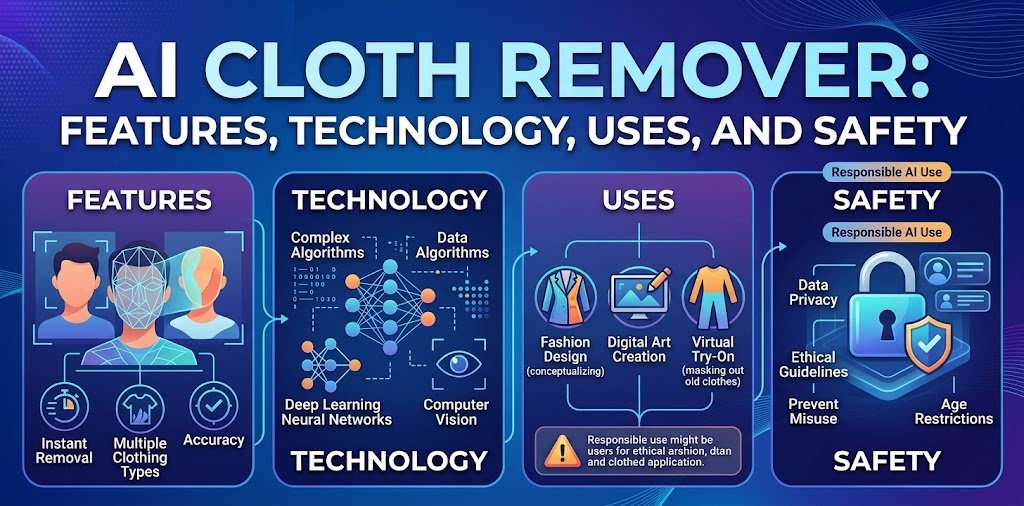
AI Cloth Remover: Features, Technology, Uses, and Safety
Artificial intelligence has introduced new ways to create and modify digital images. People can now use AI-powered software to adjust clothing colors, preview different outfits, improve photographs, and develop fashion concepts. One search term associated with these capabilities is AI Cloth Remover.
The meaning of this term varies between websites. Some applications focus on changing garments, while others generate artificial visual details that were not present in an original photograph. Understanding these differences is important when choosing an image-editing service.
This article explains the technology behind clothing-related image editing, its practical applications, important features, privacy concerns, and responsible alternatives.
What Is an AI Cloth Remover?
AI cloth remover is a general term for image-editing software that changes clothing or generates new visual details around garments. The exact capabilities depend on the application and the technology it uses.
AI systems analyze an image by identifying patterns such as shapes, colors, textures, and lighting. A generative model then creates modified pixels based on the image and the requested change.
However, generated content is not necessarily accurate. If a photograph does not show a particular detail, artificial intelligence cannot reliably establish what that hidden detail actually looks like.
How Does It Differ From an AI Clothes Changer?
An AI clothes changer focuses on replacing one outfit with another. For example, a user might preview a jacket, shirt, or dress on an image they have permission to edit.
A tool described as a cloth remover may have a different purpose. Some services attempt to generate simulated imagery beneath clothing, which raises additional concerns about consent and personal privacy.
For fashion design and online shopping, virtual try-on and outfit-replacement applications are generally more appropriate options.
How Does AI Clothing Editing Work?
AI image editing usually involves several stages. Although individual applications may use different methods, the overall process often follows a similar pattern.
Image Analysis
The software examines the photograph and identifies visible objects, garment boundaries, colors, and surrounding details. This information helps the system determine which parts of the image may need modification.
Selecting an Editing Option
The user chooses a feature, such as changing an outfit, adjusting a garment’s color, or replacing a selected area. The available choices depend on the application’s design.
Generating the Edited Image
The AI model creates new visual details using patterns learned during training. It attempts to maintain consistency with the original photograph, including lighting and perspective.
Reviewing the Result
The final image may contain distorted details, unnatural textures, or other visual errors. Reviewing the result is important before publishing it or using it for commercial purposes.
Common Uses of AI Clothing Editing
AI clothing tools can support a variety of creative activities when photographs are used with appropriate permission.
Fashion Design
Designers can experiment with colors, clothing styles, and outfit combinations before preparing physical samples. Digital previews can help communicate ideas and compare possible designs.
Online Shopping
Retailers may use AI-assisted editing to prepare product previews or display approved clothing variations. Images should still represent the products accurately so customers understand what they are purchasing.
Virtual Outfit Planning
Virtual styling applications help users explore different clothing combinations for everyday activities, work, or special occasions. These previews can make wardrobe planning easier.
Photography and Marketing
Creative teams can use image-editing tools to adjust clothing colors, improve backgrounds, or prepare visual concepts for advertising campaigns. Commercial use requires attention to licensing and model permissions.
Important Features to Consider
Before choosing an AI image editor, compare its capabilities and policies rather than relying only on promotional images.
| Feature | Why It Matters |
|---|---|
| Clothing replacement | Helps users preview different outfits |
| Image quality | Supports realistic-looking results |
| Editing controls | Makes adjustments easier |
| File compatibility | Determines supported image formats |
| Privacy policy | Explains how uploaded files are handled |
| Pricing information | Clarifies free limits and paid features |
| Commercial licensing | Defines permitted business uses |
A service should provide understandable information about its functions, costs, and data practices. A free application is not automatically reliable or private.
Is AI Cloth Remover Safe?
The safety of an AI image-editing service depends on its provider, its data-handling practices, and the type of image being uploaded.
Some online services process images on remote servers. Their policies may explain how long files remain stored, whether data is shared, and whether users can request deletion.
Protecting Personal Photographs
Consider these precautions before uploading an image:
- Read the provider’s privacy policy.
- Check whether the service offers file-deletion controls.
- Avoid uploading sensitive photographs to unfamiliar websites.
- Do not install suspicious programs or browser extensions.
- Review payment terms before purchasing a subscription.
- Never provide passwords or verification codes to an image-editing service.
These steps can reduce avoidable risks when using online tools.
Privacy, Consent, and Responsible Use
Editing photographs of real people requires careful consideration. Permission to take a photograph does not automatically mean permission to transform it into intimate or sexualized imagery.
Creating or distributing fabricated intimate images without consent can cause serious personal harm and may violate applicable laws or platform policies.
Users should avoid editing another person’s photograph to threaten, harass, impersonate, or humiliate them. Sexualized imagery involving minors is unacceptable.
For legitimate fashion projects, use licensed photographs, consenting adult models, or fictional characters. Businesses should also check image rights and retain relevant permissions where necessary.
AI Cloth Remover vs. AI Clothes Changer
These terms can appear similar in search results, but their intended functions may differ.
| Comparison | AI Cloth Remover | AI Clothes Changer |
|---|---|---|
| General purpose | May generate simulated imagery beneath garments | Replaces one outfit with another |
| Fashion design | Depends on the application | Common use case |
| Product previews | Often less suitable | Can support virtual presentations |
| Main concern | Potential misuse of personal images | Consent and product accuracy |
| Fashion alternative | Choose a suitable editing workflow | Use authorized images and licensed assets |
For designers, retailers, and people planning outfits, virtual try-on software is usually better suited to clothing-related tasks.
Can AI Clothing Editing Help Businesses?
AI clothing-editing software can support product photography, fashion concepts, advertising mockups, and online shopping experiences.
However, businesses should verify whether the provider permits commercial use. They should also ensure that edited images do not misrepresent a product’s color, material, shape, or fit.
Photographs should be owned by the business or used with the necessary permissions. Reviewing the final output before publication helps maintain accurate product information and customer trust.
Frequently Asked Questions
What does AI cloth remover mean?
It is a general search term for AI tools that modify clothing-related areas in digital images. Different services may offer different functions, so their actual features should be checked individually.
Can AI reveal what is actually beneath clothing?
No. AI-generated details are artificial predictions, not reliable evidence of what a camera never captured.
Are AI clothing-editing tools free?
Some services provide free access with usage limits, while others require subscriptions or paid credits. Pricing can change, so check the provider’s current terms.
Is AI cloth remover legal?
Legality depends on the jurisdiction and the activity involved. Creating or distributing non-consensual intimate imagery may violate applicable laws or platform policies.
What is a safer alternative?
Virtual try-on software, outfit changers, garment recoloring tools, and general-purpose photo editors can support fashion-related projects without generating intimate images of real people.
Should personal photographs be uploaded to unknown websites?
It is safer to avoid uploading sensitive images to services with unclear privacy practices, uncertain ownership, or weak security information.
Conclusion
AI Cloth Remover is a broad term associated with AI-based clothing and image modification. Related technologies can support fashion design, virtual outfit previews, and product photography, but users should understand the limitations of generated imagery.
Privacy, consent, licensing, and responsible use are important considerations whenever an image is edited. Choosing an appropriate tool and reviewing its policies can help individuals and businesses use AI image technology more carefully.





One Comment