Gadgets Investing: Meaning, Opportunities, and Risks
Introduction
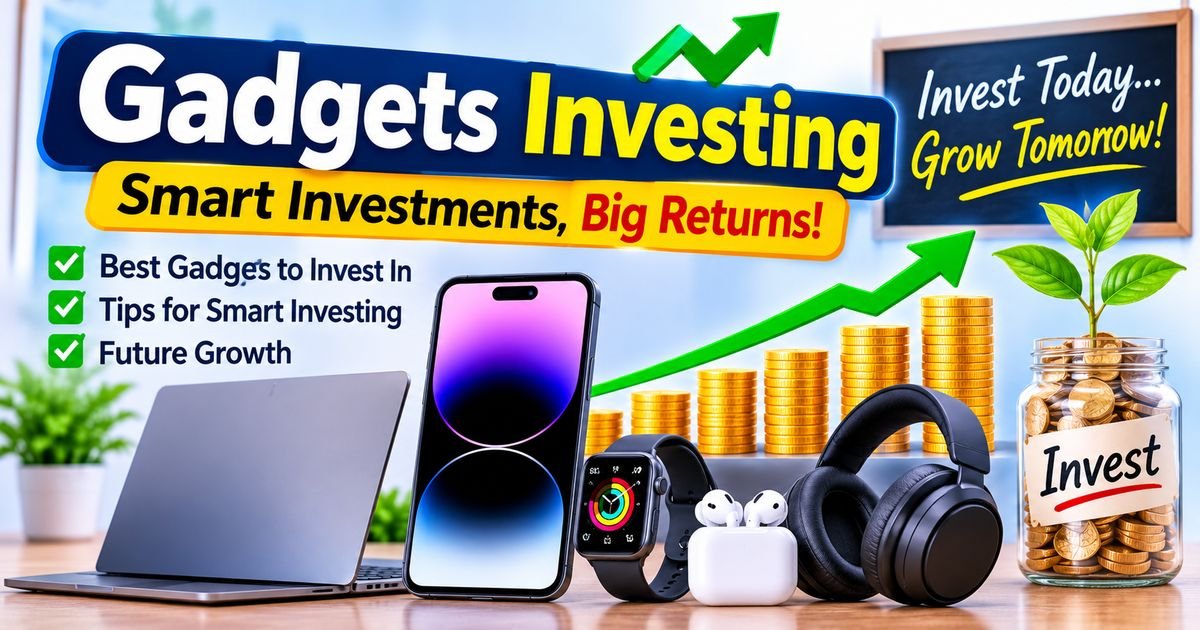
Gadgets investing is a phrase that can describe putting money into electronic devices, technology products, or businesses connected with the gadget industry. It may include buying smartphones, laptops, tablets, smartwatches, gaming accessories, wireless earbuds, and other electronic products for resale or business purposes. It can also refer to investing in companies that manufacture, distribute, or sell consumer technology.
Technology has become an important part of everyday life. People use gadgets for communication, education, entertainment, business, shopping, and productivity. As demand for electronic devices continues to change, many individuals become interested in gadget-related business opportunities. Some people purchase popular devices and resell them, while others explore online stores, repair services, accessories, and technology brands.
However, gadgets investing is not the same as traditional investing in stocks, bonds, or savings products. Electronic products can lose value over time, new models can make older devices less attractive, and unsold inventory can create financial pressure. Understanding these factors is important before spending money.
This guide explains what gadgets investing means, how the gadget market works, the different business opportunities, potential benefits, common risks, and important points to consider before getting started.
What Is Gadgets Investing?
Gadgets investing generally means using money to purchase electronic products or support businesses that operate in the consumer technology market. The purpose may be to generate income through resale, product distribution, repair services, accessories, or another gadget-related business activity.
For example, someone might purchase smartphones at a wholesale price and sell them through an online store. Another person might invest in a small business that sells chargers, phone cases, headphones, and other accessories.
The phrase can have different meanings depending on where it appears. It is not one specific investment method with a universally accepted definition. Therefore, it is important to understand the context before treating it as a financial strategy.
Gadgets investing can involve several areas:
- Buying and reselling electronic devices.
- Selling smartphone and computer accessories.
- Starting an online gadget store.
- Supporting a gadget repair business.
- Distributing electronic products.
- Investing in established technology companies.
- Exploring new consumer electronics markets.
Each activity has different costs, risks, and potential returns.
Why Are People Interested in Gadgets Investing?
Electronic gadgets have become essential products for many households and businesses. Smartphones help people communicate, computers support professional work, and smart devices provide convenience in daily routines.
This demand creates opportunities for businesses that supply technology products.
One reason people explore gadgets investing is the variety of available products. A small business does not necessarily need to sell expensive computers or premium smartphones. It can begin with accessories such as charging cables, protective cases, screen protectors, and wireless accessories.
Another reason is the growth of online shopping. Sellers can advertise products through websites, social media platforms, and online marketplaces. This can make it easier to reach customers without opening a large physical store.
However, demand alone does not guarantee profit. A successful business needs suitable products, reliable suppliers, competitive prices, customer service, and careful financial planning.
Understanding the Gadget Market
The gadget market includes products designed to support communication, entertainment, productivity, fitness, and other everyday activities.
It is a broad industry that changes as manufacturers introduce new technologies and customer preferences develop.
Smartphones
Smartphones are among the most recognizable consumer electronic products. They are used for calling, messaging, photography, internet browsing, mobile banking, gaming, and many other activities.
A smartphone-related business may sell new devices, refurbished phones, protective accessories, or replacement parts.
Before entering this market, sellers should understand model differences, storage options, warranty conditions, and local customer demand.
Laptops and Computers
Laptops and desktop computers are important for students, professionals, businesses, and content creators.
Some customers need affordable devices for basic tasks, while others look for powerful systems for editing, programming, or gaming.
Businesses can explore computer accessories, keyboards, mice, storage devices, laptop stands, and maintenance services.
Smartwatches and Fitness Devices
Smartwatches and fitness trackers have become popular because they offer features such as activity tracking, notifications, timekeeping, and health-related measurements.
The market includes different price ranges and product categories. Sellers should explain compatibility, battery life, supported features, and limitations accurately.
Wireless Earbuds and Headphones
Wireless earbuds, headphones, and speakers are common consumer electronics products.
Customers may compare sound quality, battery performance, comfort, connectivity, microphone quality, and brand reputation.
These products can be part of an accessories business, but quality control is especially important because low-quality products can generate complaints and returns.
Gaming Accessories
Gaming accessories include controllers, headsets, keyboards, mice, gaming chairs, and other equipment.
Demand may depend on popular gaming platforms, product compatibility, and the preferences of local customers.
A seller should check whether an accessory supports the customer’s particular device before recommending it.
Smart Home Devices
Smart home products include connected lights, cameras, plugs, sensors, and other devices.
They can provide convenience and automation, but customers may need help understanding installation requirements, internet compatibility, and privacy settings.
Different Ways to Explore Gadgets Investing
There is no single way to participate in the gadget market. The right approach depends on available money, knowledge, business goals, and customer demand.
1. Buying and Reselling Gadgets
Buying and reselling is one of the most direct gadget-related business models.
A seller purchases electronic products from a supplier and offers them to customers at a higher price. The difference between the selling price and total costs determines the business’s profit or loss.
For example, a seller may purchase a phone accessory for a wholesale price and list it in an online store. However, the seller must also account for delivery, packaging, advertising, payment charges, returns, and other expenses.
The purchase price alone does not determine profitability.
2. Starting an Online Gadget Store
An online gadget store allows a business to sell products through a website or marketplace.
The store may focus on one product category, such as mobile accessories, or offer different types of consumer electronics.
A focused store can be easier to manage because the seller can develop knowledge about a particular customer group.
Important areas include product descriptions, clear photographs, accurate specifications, delivery policies, payment options, and customer support.
3. Selling Gadget Accessories
Accessories can provide an alternative to selling expensive electronic devices.
Examples include:
- Phone covers.
- Screen protectors.
- Charging cables.
- Power banks.
- Laptop bags.
- Wireless chargers.
- Headphone cases.
- Computer accessories.
These products may require less initial capital than some expensive gadgets, but competition can be high.
Product quality and compatibility should always be checked.
4. Refurbished Gadget Business
Refurbished electronics are previously used devices that have been inspected, repaired when necessary, and prepared for resale.
This market may appeal to customers who want lower-cost alternatives to new products.
However, sellers should clearly explain the condition of every device. Battery health, screen condition, repairs, accessories, warranty terms, and possible cosmetic marks should not be hidden.
A transparent grading system can help customers understand what they are purchasing.
5. Gadget Repair Services
Repair services are another way to participate in the electronics market.
Businesses may provide troubleshooting, software support, component replacement, cleaning, and maintenance.
This activity requires appropriate technical knowledge and responsible handling of customer devices and information.
A repair business should provide clear estimates, explain possible limitations, and obtain customer approval before carrying out paid work.
6. Investing in Technology Companies
Some people use the phrase gadgets investing when discussing financial investments in companies that manufacture or sell electronic devices.
This is different from purchasing gadgets for resale.
Investors may research publicly traded companies involved in semiconductors, smartphones, computers, consumer electronics, or technology distribution.
Company shares can rise or fall in value. Research should include financial performance, business risks, competition, and market conditions. No return is guaranteed.
How Does a Gadget-Related Business Work?
A gadget business usually follows a series of steps, beginning with market research and ending with customer support.
Step 1: Research Customer Demand
The first step is understanding what customers actually want.
A product may look attractive online, but that does not mean people in a particular market are willing to purchase it.
Research can include customer questions, competitor listings, product reviews, local retail prices, and marketplace trends.
Step 2: Choose a Product Category
It is usually easier to understand a focused product category than to manage every type of electronic device at once.
For example, a beginner might research phone accessories rather than immediately selling smartphones, laptops, cameras, and gaming equipment.
A focused category helps with supplier research, pricing, product knowledge, and customer support.
Step 3: Compare Suppliers
A reliable supplier is important for any gadget-related business.
Before purchasing products, compare supplier reputation, product specifications, warranty arrangements, delivery conditions, and return policies.
Avoid making large purchases based only on unusually low prices.
Step 4: Calculate Total Costs
A product’s wholesale price is only one part of its cost.
Other expenses may include:
- Shipping and transportation.
- Packaging materials.
- Marketplace charges.
- Payment processing fees.
- Advertising.
- Storage.
- Returns and replacements.
- Taxes and applicable business charges.
A business should calculate these expenses before deciding its selling price.
Step 5: Select a Sales Channel
Products can be sold through physical shops, websites, online marketplaces, or social media pages.
Each channel has different requirements and costs.
An online store may require website maintenance and digital marketing, while a physical shop may involve rent, electricity, and other operating expenses.
Step 6: Provide Customer Support
Customer support is important because electronic products sometimes develop problems or require setup assistance.
A seller should provide accurate product information, clear return conditions, and reasonable communication.
Good service can help establish trust and encourage repeat customers.
Benefits of Gadgets Investing
Gadget-related business activities can offer several opportunities, although results depend on execution and market conditions.
A Wide Range of Products
The electronics market includes many product categories and price ranges.
A seller can focus on affordable accessories, mid-range devices, computer equipment, or specialized technology products.
This variety makes it possible to explore different business models.
Opportunities in Online Selling
Online platforms allow sellers to present products to customers beyond their immediate neighborhoods.
A business can use product pages, customer reviews, social media content, and educational guides to explain what it offers.
However, online competition and advertising costs must be considered.
Opportunities for Specialized Knowledge
People who understand specific products may be able to provide better guidance than general sellers.
For example, someone familiar with computer accessories can explain compatibility, connection types, and performance differences.
Product knowledge can improve customer confidence.
Possibility of Repeat Customers
Customers may return to a seller for accessories, replacements, upgrades, and additional devices.
Reliable service and honest product descriptions can help build long-term relationships.
Different Business Sizes
A gadget-related business does not always require a large retail operation.
Some sellers focus on a small product category, while others operate larger stores or distribution businesses.
The scale should match the available resources and the seller’s experience.
Risks and Challenges of Gadgets Investing
Although the gadget market offers opportunities, it also has important risks.
Products Can Lose Value
Electronic products often become less attractive when manufacturers release newer models.
A device that sells well today may become harder to sell later.
This is known as product depreciation and can affect resale businesses.
Changing Technology
Technology develops quickly. New charging standards, software updates, device features, and product designs can change customer preferences.
A seller who does not follow these changes may end up with outdated inventory.
Unsold Inventory
Buying too many products can create problems if customers do not purchase them.
Unsold inventory ties up money that could otherwise support operating expenses or more suitable products.
Starting with smaller quantities can help a business test demand.
Counterfeit and Low-Quality Products
The gadget market includes counterfeit products and accessories that do not meet advertised specifications.
Poor-quality products can lead to returns, complaints, and damage to a business’s reputation.
Suppliers should be checked carefully, and product claims should be verified.
Warranty and Return Problems
Electronic products may require repairs or replacements.
If a seller does not understand warranty conditions, handling customer complaints can become difficult.
Clear policies should be established before selling products.
Strong Competition
Many online and physical retailers sell similar products.
Customers can compare prices quickly, which may reduce profit margins.
Businesses need to compete through product quality, accurate information, service, and convenience rather than relying only on low prices.
Financial Risk
There is no guarantee that money spent on gadgets will generate a profit.
Products may remain unsold, require repairs, or lose value. Business owners should avoid spending money they cannot afford to lose.
Gadgets Investing vs. Traditional Investing
Gadgets investing and traditional financial investing are different activities.
Buying gadgets for resale is generally a business activity. It involves purchasing physical products and attempting to earn income through sales.
Traditional investing may involve purchasing shares, bonds, or other financial assets.
The risks are also different. A gadget seller may face inventory, storage, warranty, and depreciation risks. A financial investor may face market volatility, company performance risks, and other investment-related uncertainties.
Understanding this difference helps prevent confusion when encountering the phrase gadgets investing online.
How to Evaluate a Gadget Before Buying It for Resale
Product research is an important part of a gadget business.
Check Product Demand
Look for evidence that customers are interested in the product.
Search marketplace listings, read customer reviews, compare local availability, and study competitor offerings.
Review Product Specifications
Check important specifications such as compatibility, battery capacity, connectivity, supported devices, storage, and included accessories.
Descriptions should match the manufacturer’s information.
Compare Market Prices
Compare prices from multiple sellers.
A very low purchase price may indicate poor quality, missing accessories, counterfeit products, or unfavorable warranty conditions.
Understand the Warranty
Check whether the product has a manufacturer warranty, seller warranty, or no warranty.
Understand how customers can request repairs or replacements.
Examine Return Conditions
Returns can affect the financial performance of a gadget business.
Before purchasing stock, understand whether the supplier accepts defective products or allows returns for other reasons.
Consider Product Lifecycles
Some gadgets remain popular for years, while others are quickly replaced by newer versions.
Products with short lifecycles may require faster inventory turnover.
Gadgets Investing for Beginners
Beginners should avoid assuming that a popular gadget automatically represents a profitable opportunity.
A more careful approach begins with learning the market.
Start by researching a product category and comparing prices from established sellers. Study customer reviews to identify common complaints and product weaknesses.
Next, understand the costs involved. Include shipping, packaging, platform fees, possible returns, and other operating expenses.
A small test can provide useful information about customer interest without requiring a large purchase.
Keep business records from the beginning. Record purchase costs, sales, expenses, returns, and remaining inventory.
It is also important to separate business money from personal spending. Clear records make it easier to understand whether the activity is actually generating a profit.
Gadgets Investing in Pakistan
Pakistan has an active market for smartphones, computers, mobile accessories, gaming equipment, and other electronic products.
Customers often compare prices, specifications, warranty conditions, and availability before purchasing a device.
This creates opportunities for retailers and online sellers, but local market conditions should be considered.
Smartphones and Accessories
Smartphones are widely used for communication, entertainment, education, and business.
Accessories such as protective cases, screen protectors, chargers, and cables are common retail products.
Sellers should check device compatibility and avoid making unsupported claims about product quality.
Online Gadget Selling
Businesses can use websites and social media to display products and communicate with customers.
Clear photographs, accurate descriptions, delivery information, and customer support can help establish trust.
Before choosing a marketplace, review its seller policies, charges, and dispute procedures.
Warranty and Product Authenticity
Customers may be concerned about counterfeit products, unofficial imports, and warranty limitations.
Sellers should clearly explain whether a product is new, used, refurbished, officially distributed, or imported through another channel.
Accurate information can reduce misunderstandings.
Payment and Delivery
Businesses should select payment and delivery methods that suit their customers.
They should also understand applicable charges, delivery risks, and procedures for handling returned packages.
Online Platforms for Gadget Research
Online platforms can help people compare electronic products and understand market demand.
Manufacturer Websites
Official manufacturer websites provide specifications, supported features, product announcements, and warranty information.
They are useful when checking whether a product description is accurate.
Online Marketplaces
Marketplaces can show competing prices, customer reviews, product availability, and common product categories.
However, marketplace listings should be evaluated carefully because product descriptions and seller reliability can vary.
Technology Review Websites
Technology publications often publish product reviews, comparisons, buying guides, and news.
Reading multiple independent reviews can provide a better understanding of product strengths and limitations.
Social Media Platforms
Social media can help sellers observe customer questions and product discussions.
However, viral posts and promotional claims should not be treated as reliable proof of demand or product quality.
How to Calculate Profit in a Gadget Business
Understanding profit is essential before purchasing products for resale.
A basic calculation is:
Profit = Selling Price − Total Cost
For example, suppose a seller purchases an accessory for 1,000 units of currency and sells it for 1,400. If shipping, packaging, and other costs total 150, the remaining amount is 250 before any additional business expenses or taxes.
This example illustrates why sellers should calculate all costs rather than comparing only the purchase and selling prices.
Businesses should also consider the time required to sell inventory. A product that produces a small margin but sells consistently may perform differently from an expensive item that remains unsold for months.
Common Mistakes in Gadgets Investing
Several mistakes can make a gadget-related business difficult to manage.
Purchasing Too Much Stock
Buying large quantities before testing demand can create inventory problems.
A product may not sell as quickly as expected, leaving money tied up in unsold stock.
Ignoring Product Compatibility
Accessories are not universally compatible.
A charger, cable, case, or computer accessory may work only with particular devices.
Incorrect recommendations can cause returns and customer complaints.
Choosing Suppliers Only by Price
The cheapest supplier is not always the best choice.
Product quality, authenticity, delivery reliability, and warranty support should also be considered.
Making Unverified Claims
Sellers should not advertise features that a product does not have.
False claims can damage customer trust and create disputes.
Ignoring Customer Service
A sale does not end when payment is received.
Customers may need setup assistance, warranty information, or help with returns.
Failing to Track Expenses
Without accurate records, it is difficult to know whether a business is profitable.
All purchases, sales, fees, and returns should be recorded.
Is Gadgets Investing Worth Exploring?
Gadgets investing may be worth exploring as a business concept for people who understand consumer electronics and are willing to research the market.
It may suit someone interested in online retail, accessories, refurbished devices, or technology services.
However, it should not be viewed as a guaranteed way to make money.
The market changes quickly, and electronic products can lose value. Competition, supplier problems, product defects, and customer returns can also affect results.
A sensible decision depends on research, available resources, product knowledge, and realistic financial expectations.
The Future of the Gadget Market
The gadget market continues to develop as manufacturers introduce new technologies and consumers adopt connected devices.
Artificial intelligence features are becoming more common in smartphones, computers, and other consumer electronics.
Wearable technology is also evolving, with smartwatches and fitness devices offering additional functions.
Smart home products are expanding the range of connected devices used in homes and workplaces.
Wireless connectivity, improved batteries, faster processors, and new display technologies may also influence future consumer demand.
These developments could create new business opportunities, but they may also make older products less competitive.
Anyone exploring gadgets investing should follow product announcements and customer preferences rather than assuming that every new technology will become commercially successful.
Frequently Asked Questions About Gadgets Investing
What does gadgets investing mean?
Gadgets investing generally refers to spending money on electronic products or businesses connected with the gadget industry. It may include buying and reselling devices, selling accessories, operating an online store, or investing in technology companies.
Is gadgets investing a real financial term?
It is not a widely standardized financial term. Its meaning depends on the context in which it is used. It may describe a gadget-related business rather than a traditional investment strategy.
Can beginners explore gadget-related businesses?
Yes, beginners can research the market and learn about product categories, suppliers, pricing, and customer demand. Starting with limited inventory and understanding the costs can help reduce business risk.
Which gadgets are commonly sold?
Common categories include smartphones, laptops, tablets, smartwatches, headphones, wireless earbuds, gaming accessories, chargers, and smart home devices.
Is buying gadgets always profitable?
No. Electronic products can lose value, become outdated, or remain unsold. Profit depends on purchase costs, selling prices, demand, competition, and other business expenses.
What is the difference between gadgets investing and technology investing?
Gadgets investing often refers to buying or selling physical electronic products. Technology investing usually refers to financial investments in technology companies or related assets.
Can gadgets investing be done online?
Yes. People can sell electronic products through online stores, marketplaces, and social media. They still need reliable suppliers, accurate product information, secure payment methods, and customer support.
What are the biggest risks of gadgets investing?
Important risks include depreciation, outdated inventory, counterfeit products, low-quality suppliers, returns, warranty problems, and strong competition.
Are refurbished gadgets suitable for resale?
They can be suitable for resale when devices are properly inspected and their condition is clearly explained. Sellers should disclose repairs, battery condition, cosmetic issues, and warranty arrangements.
How can someone research gadget demand?
Research can include marketplace listings, competitor prices, customer reviews, technology publications, product announcements, and questions from potential customers.
Conclusion
Gadgets investing is a broad phrase associated with electronic products and businesses in the consumer technology market. It can include buying and reselling devices, selling accessories, offering repair services, running an online gadget store, or researching technology companies.
The market offers different opportunities, but it also comes with challenges. Electronic products can lose value, new models can replace older ones, and poor supplier decisions can create financial losses.
The best starting point is understanding the market, selecting a suitable product category, researching customer demand, checking suppliers, and calculating all costs. Clear product descriptions, reliable service, and careful financial records are equally important.
Most importantly, gadgets investing should be approached as a business or investment activity that requires research and planning, not as a guaranteed source of income. A realistic understanding of opportunities and risks can help people make better decisions in the changing electronics market.