
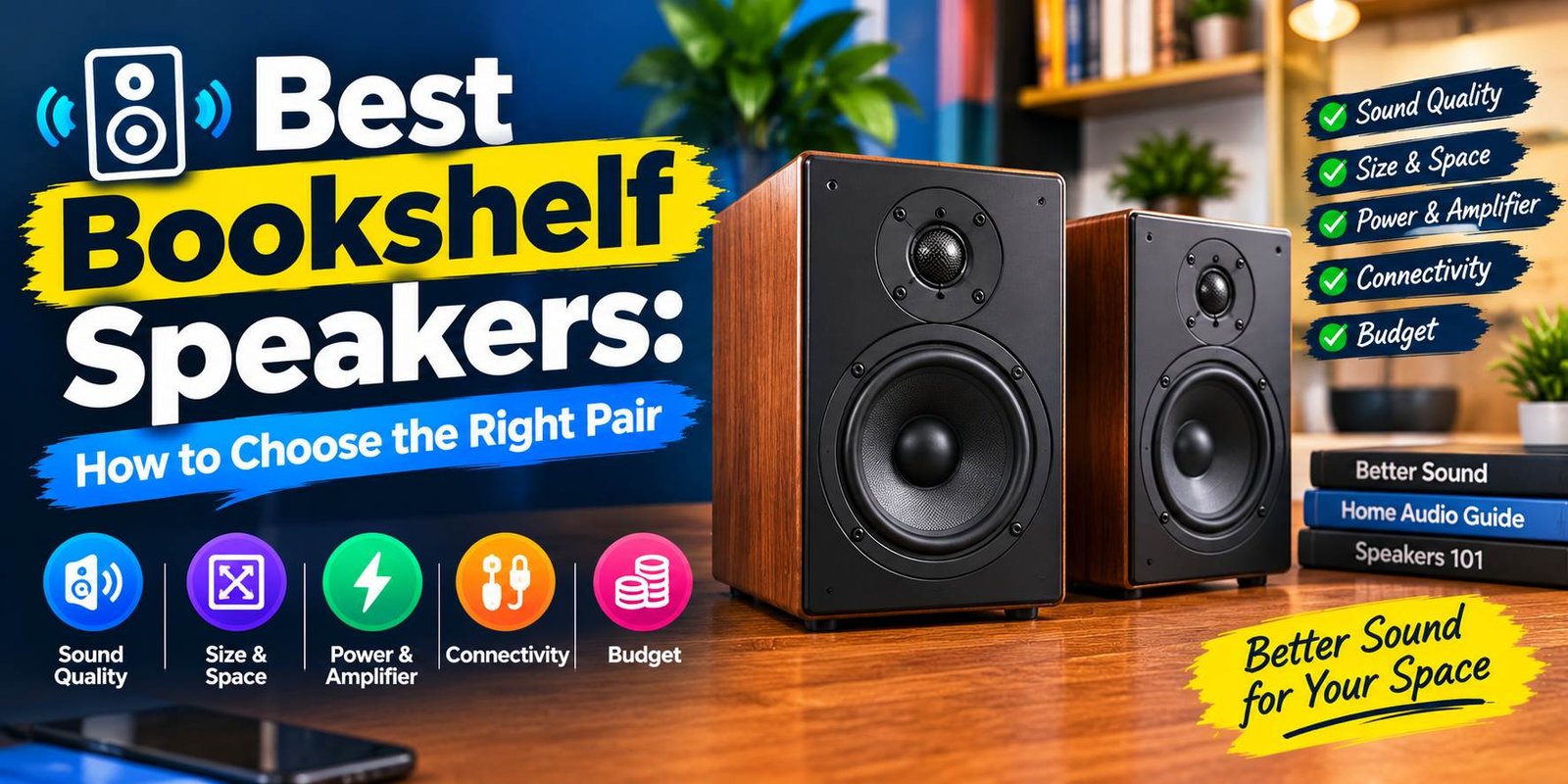
Best Bookshelf Speakers: How to Choose the Right Pair
Finding the best bookshelf speakers can make a noticeable difference in how you enjoy music, movies, games, and other audio content. A good pair can deliver clear vocals, detailed instruments, and a balanced sound without requiring the space occupied by large floor-standing speakers.
However, choosing the right speakers involves more than comparing prices or looking at product pictures. You need to consider sound quality, room size, connectivity, power requirements, and how you plan to use them.
This guide explains what to look for in bookshelf speakers, the differences between popular designs, and how to select a pair that fits your room and budget.
What Are Bookshelf Speakers?
Bookshelf speakers are compact loudspeakers designed to reproduce audio in a relatively small enclosure. Despite their name, they do not always need to sit on a bookshelf. Dedicated speaker stands, sturdy desks, and properly positioned cabinets can also work well.
Many models use two main drivers: a woofer for lower and middle frequencies and a tweeter for higher frequencies. Some designs include additional components or different driver arrangements to improve their sound.
Bookshelf speakers are popular because they can offer an engaging listening experience while taking up less space than larger speaker systems.
Why Are Bookshelf Speakers Popular?
Their popularity comes from a combination of compact size and versatile performance. They can fit into bedrooms, home offices, living rooms, and small entertainment areas.
Depending on the model, bookshelf speakers can serve as a stereo music system, desktop audio solution, or part of a larger home theater setup.
Types of Bookshelf Speakers
Before choosing the best bookshelf speakers for your needs, understand the two main types.
1. Powered Bookshelf Speakers
Powered bookshelf speakers contain built-in amplification. You can connect compatible audio sources directly without purchasing a separate stereo amplifier.
Depending on the model, available connections may include Bluetooth, USB, optical audio, RCA, or a 3.5 mm input. Not every powered speaker offers all these options, so check the specifications carefully.
Best for: Desktop setups, apartments, simple music systems, and users who prefer fewer components.
2. Passive Bookshelf Speakers
Passive bookshelf speakers require an external amplifier or receiver to produce sound. This adds another component to your setup, but it can offer greater flexibility when choosing and upgrading equipment.
You can select an amplifier that matches the speakers’ power handling, impedance, and intended use.
Best for: Traditional stereo systems, customizable audio setups, and listeners who want to upgrade individual components over time.
What to Look for in the Best Bookshelf Speakers
The right features depend on your listening habits, room, and budget. Consider these important factors before making a purchase.
Sound Quality
Sound quality should be one of your main priorities. Look for speakers that reproduce vocals naturally, keep instruments distinct, and deliver bass without overwhelming the rest of the music.
A speaker does not have to produce extremely strong bass to sound good. A balanced presentation can be more enjoyable for long listening sessions.
If possible, listen to a demonstration using familiar music before buying.
Frequency Response
Frequency response describes the range of sound frequencies a speaker can reproduce. Lower frequencies provide bass, while higher frequencies contribute to treble and detail.
A wider advertised frequency range does not automatically mean better sound. The measurement method, room acoustics, distortion, and overall tuning also matter.
Size and Room Compatibility
Consider where the speakers will be placed. Large bookshelf speakers may deliver fuller bass, but they can be difficult to position on a small desk.
Smaller models may suit compact rooms, although some will need a subwoofer if you want deeper bass for movies or electronic music.
Connectivity
Choose connections that match your devices.
- Bluetooth: Convenient wireless playback from compatible phones, tablets, and computers.
- RCA or 3.5 mm: Useful for compatible analog audio sources.
- Optical input: Helpful for connecting supported televisions and other digital sources.
- USB: Available on some models for compatible digital audio connections.
- Speaker terminals: Commonly used to connect passive speakers to an amplifier.
Always confirm that the speaker supports the connections you actually need.
Power and Amplifier Compatibility
For passive models, check the speaker’s impedance, recommended amplifier power, and sensitivity. These specifications help determine whether an amplifier can drive the speakers appropriately.
For powered models, review the manufacturer’s output ratings and recommended listening conditions. More advertised wattage alone does not guarantee superior sound quality.
Build Quality
A well-built cabinet can help control unwanted vibrations. Examine the cabinet construction, driver quality, connectors, and overall finish.
Good build quality is particularly valuable if you plan to use your speakers regularly for several years.
Best Bookshelf Speakers for Different Needs
There is no single pair that works perfectly for every listener. Your ideal choice depends on how you intend to use the speakers.
Best Bookshelf Speakers for Music
For music listening, prioritize balanced sound, clear vocals, and convincing instrument separation. A model with controlled bass and smooth treble can make different genres enjoyable without emphasizing only one part of the recording.
Consider your favorite music when comparing speakers. Acoustic recordings, rock, jazz, and electronic music can reveal different strengths and weaknesses.
Best Bookshelf Speakers for Desktop Computers
Desktop speakers should fit comfortably on your desk without crowding your workspace. Front-facing connections, simple volume controls, and convenient computer connectivity can make daily use easier.
Near-field listening, where you sit relatively close to the speakers, also makes placement important. Keep the speakers stable and avoid blocking their drivers.
Best Bookshelf Speakers for Movies
For movies, dialogue clarity is especially important. Look for speakers that reproduce speech naturally and create a convincing stereo image.
If you want deeper explosions and stronger low-frequency effects, consider adding a compatible subwoofer. A larger home theater system may be preferable if surround sound is a priority.
Best Bookshelf Speakers for Gaming
Gaming speakers should provide clear effects, dialogue, and environmental details. A good stereo pair can create a spacious soundstage, although the result depends on the recording, game, and speaker placement.
If you use voice chat frequently, make sure the speakers work well with your microphone setup and do not create excessive audio feedback.
Bookshelf Speakers vs. Floor-Standing Speakers
Both speaker types can deliver excellent audio, but their designs serve different needs.
Bookshelf speakers generally take up less space and can be easier to fit into smaller rooms. They may also cost less to purchase, although high-end compact models can be expensive.
Floor-standing speakers have larger cabinets and can accommodate different driver arrangements. Depending on their design, they may provide stronger bass output and greater sound output without a separate subwoofer.
Neither type is automatically better. Room dimensions, listening distance, budget, and personal preference should guide your decision.
Do You Need a Subwoofer With Bookshelf Speakers?
A subwoofer is not essential for every setup. Some bookshelf speakers reproduce enough bass for everyday music listening, especially in smaller rooms.
However, a subwoofer can add deeper low-frequency output for action movies, electronic music, and games with substantial bass effects.
Before purchasing one, check whether your speakers and amplifier support the required connections. Proper placement and level adjustment are also important because excessive bass can make a system sound unbalanced.
How to Position Bookshelf Speakers Correctly
Even the best bookshelf speakers can disappoint when placed poorly. A few simple adjustments may improve the listening experience.
Use Stable Stands or Surfaces
Place the speakers on sturdy stands, a stable desk, or another suitable surface. Avoid positions where the cabinet can wobble or vibrate excessively.
Keep the Drivers Unobstructed
Do not place books, decorative objects, or other items directly in front of the drivers. Obstructions can affect the sound reaching your listening position.
Experiment With Speaker Spacing
Start by placing the speakers at a similar distance from your listening position. Adjust the distance between them until vocals and instruments form a clear stereo image.
Consider Wall Distance
Some speakers have rear-facing bass ports and may respond differently when positioned close to a wall. Follow the manufacturer’s placement recommendations and experiment with the distance to find a balanced result.
Adjust the Listening Angle
Angling the speakers slightly toward your listening position may improve stereo imaging. The ideal angle depends on the model and your room, so small adjustments are worth trying.
Common Mistakes to Avoid When Buying Bookshelf Speakers
Avoiding a few common mistakes can help you spend your money wisely.
Choosing Only by Price
An expensive speaker is not necessarily the right choice for your room. Compare sound quality, connectivity, size, warranty, and your actual requirements instead of relying on price alone.
Ignoring the Room
A speaker designed for a larger space may not be practical on a crowded desk. Similarly, a tiny speaker may struggle to deliver the sound you want in a large living room.
Overlooking Connectivity
Check whether the speakers connect to your computer, television, phone, or amplifier before ordering. You may need additional cables or compatible equipment.
Expecting Powerful Bass From Every Compact Model
Small cabinets have physical limitations, and bass performance varies considerably between models. If deep bass matters to you, check independent measurements or consider a subwoofer.
Forgetting Placement and Maintenance
Dust, unstable surfaces, obstructed drivers, and poor placement can affect everyday use. Keep the speakers clean and follow the manufacturer’s care instructions.
How Much Should You Spend on Bookshelf Speakers?
Your budget should reflect the features and performance you need rather than a particular price range alone.
Entry-level models can be suitable for casual listening, schoolwork, and basic desktop setups. Midrange options may provide better connectivity, construction, or sound performance. Premium models can offer more advanced engineering and refinement, but their benefits depend on your listening environment.
Remember to include the cost of stands, cables, an amplifier for passive speakers, or a subwoofer if needed. Comparing the complete system cost provides a more realistic picture of your budget.
Frequently Asked Questions
Are bookshelf speakers good for everyday use?
Yes. Bookshelf speakers can work well for music, movies, gaming, online meetings, and other everyday activities. The best choice depends on the size of your room and the features you need.
Are powered or passive bookshelf speakers better?
Powered speakers are convenient because they include amplification. Passive speakers offer more flexibility when selecting separate audio components. Neither type is universally better.
Can bookshelf speakers connect to a television?
Yes, if the connection types are compatible. Some powered speakers accept optical or analog inputs, while passive speakers usually need a suitable amplifier or receiver connected to the television.
Do bookshelf speakers need an amplifier?
Passive bookshelf speakers require an external amplifier. Powered bookshelf speakers have amplification built in and generally do not need a separate stereo amplifier.
Can bookshelf speakers fill a large room?
Some larger or more capable models can work well in spacious rooms, but performance depends on sensitivity, power handling, listening distance, and the desired volume. Larger spaces may benefit from bigger speakers or a subwoofer.
Are bookshelf speakers suitable for a small bedroom?
Yes. Their compact design makes them a practical choice for small bedrooms and home offices. Choose a size that fits your available space and position the speakers carefully.
Final Thoughts
The best bookshelf speakers are the ones that match your listening preferences, available space, equipment, and budget. Powered models provide a straightforward setup, while passive models allow you to customize your audio system with a separate amplifier.
Before making a decision, compare sound quality, connectivity, size, amplifier compatibility, and warranty support. Think about whether you mainly listen to music, watch movies, play games, or use your computer for work.
A carefully chosen pair, positioned correctly in your room, can provide an enjoyable listening experience without requiring a complicated or oversized audio system.



One Comment