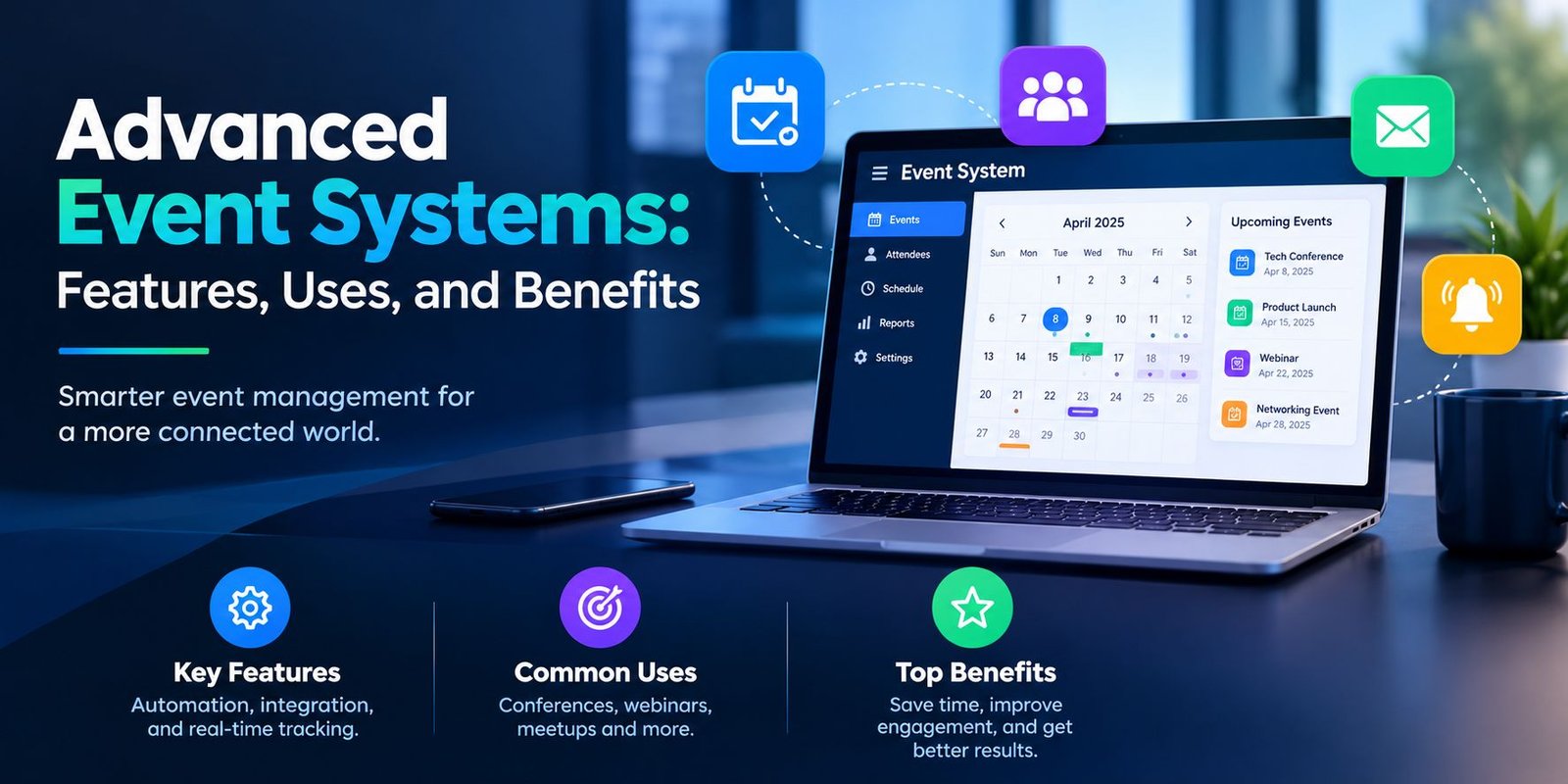
Advanced Event Systems: Features, Uses, and Benefits
This is where advanced event systems become useful. These systems combine digital tools, software, and connected technologies to help organizers plan, manage, and monitor events more efficiently.
Whether someone is arranging a business conference, trade show, concert, training session, or online meeting, the right technology can make the entire process easier. This guide explains what advanced event systems are, how they work, their main features, and why organizations use them.
What Are Advanced Event Systems?
Advanced event systems are technology-based solutions designed to support different stages of event management. They help organizers handle tasks such as attendee registration, ticketing, scheduling, communication, access control, and event reporting.
Instead of managing everything separately, organizers can use connected tools to keep important information in one place.
For example, a conference organizer may use an event management platform to publish the event schedule, accept registrations, send confirmation emails, and check attendees in when they arrive.
Some systems also support virtual and hybrid events, allowing people to participate either in person or through an online platform.
How Do Advanced Event Systems Work?
Advanced event systems generally work by collecting information, organizing tasks, and providing tools that help organizers manage activities.
The exact process depends on the software and equipment being used, but a typical setup may include these stages:
- Event planning: Organizers create an event, select dates, add sessions, and manage important details.
- Registration: Attendees submit their information through an online registration page.
- Communication: The system sends confirmations, reminders, and event updates.
- Check-in: Staff verify registrations using digital tickets, QR codes, or attendee lists.
- Live management: Organizers monitor schedules, attendance, and other event activities.
- Reporting: The platform collects information that can help evaluate the event afterward.
These connected processes reduce the need for repetitive manual work.
Key Features of Advanced Event Systems
Different platforms offer different tools. However, several features are commonly found in modern event management solutions.
1. Online Registration and Ticketing
Registration tools allow people to sign up for an event through a website or dedicated page. Organizers can collect attendee details, manage ticket categories, and send registration confirmations.
Some platforms also support payment processing, discount codes, and ticket availability limits.
2. Event Scheduling
Scheduling tools help organizers create and update event programs. They can add session times, speaker information, room details, and activity descriptions.
For larger events, these features make it easier to coordinate multiple sessions without relying entirely on printed schedules.
3. Attendee Management
Attendee management tools help organizers maintain registration records and organize participant information.
Depending on the platform, organizers may be able to group attendees, track registration status, manage special requirements, and review attendance records.
4. Digital Check-In
Digital check-in can make entry more organized. Some systems allow staff to scan QR codes or digital tickets to verify registrations.
This can reduce paperwork and help event teams identify registered attendees more quickly.
5. Communication Tools
Communication features help organizers share important information before and during an event.
These may include email notifications, reminders, announcements, and mobile updates. Clear communication helps attendees stay informed about schedule changes and other important details.
6. Reporting and Analytics
Reporting tools provide information about registrations, ticket sales, attendance, and participant engagement.
Organizers can use these reports to understand what worked well and identify areas that may need improvement.
Types of Advanced Event Systems
Advanced event systems can serve different purposes depending on the event format and organizational requirements.
In-Person Event Management Systems
These systems support physical events such as conferences, exhibitions, concerts, and business meetings. Common tools include registration management, ticket scanning, attendee tracking, and venue coordination.
Virtual Event Platforms
Virtual event platforms allow participants to attend activities online. They may include live streaming, video sessions, chat features, digital networking, and virtual presentation rooms.
Hybrid Event Systems
Hybrid systems support events that combine physical attendance with online participation. They help organizers coordinate both audiences and provide access to event content through digital channels.
Conference and Exhibition Management Systems
These solutions are designed for larger professional events. They may support speaker schedules, session bookings, exhibitor information, attendee registration, and networking activities.
Benefits of Using Advanced Event Systems
Using the right event technology can improve organization and reduce unnecessary work.
Better Organization
A central platform can keep schedules, registrations, attendee details, and event updates organized. This makes important information easier for event teams to access.
Less Manual Work
Automation can handle repetitive tasks such as confirmation emails, reminders, and registration updates. Staff can then focus on other responsibilities.
Improved Attendee Experience
Simple registration, digital tickets, clear schedules, and timely updates can make participation more convenient.
More Accurate Information
Digital records can help reduce mistakes caused by manually updating multiple spreadsheets or paper lists.
Useful Performance Insights
Reports can help organizers understand attendance levels, registration patterns, and other event results. This information can support better planning for future events.
Common Uses of Advanced Event Systems
Advanced event systems are useful across different industries and event types.
- Business conferences: Manage speakers, sessions, registrations, and attendees.
- Trade shows: Organize exhibitors, visitor information, and entry procedures.
- Concerts and festivals: Support ticketing, entry management, and event updates.
- Educational events: Coordinate workshops, seminars, and training sessions.
- Corporate meetings: Manage invitations, schedules, and participant communication.
- Online events: Provide virtual sessions, digital networking, and live presentations.
The most suitable system depends on the size, format, and requirements of the event.
How to Choose the Right Event Management System
Not every organization needs the same features. A small workshop may only require registration and email notifications, while a large conference may need ticketing, check-in, scheduling, and detailed reporting.
Consider these factors before choosing a platform:
- Event size: Check whether the system can handle your expected number of participants.
- Required features: Identify the tools you actually need instead of paying for unnecessary options.
- Ease of use: Choose software that organizers and attendees can understand without complicated training.
- Integration options: Check whether it works with your website, payment provider, email service, or other tools.
- Security: Review how the platform protects attendee information and manages account access.
- Pricing: Compare subscription costs, transaction fees, and additional charges.
- Customer support: Look for reliable assistance if technical problems occur during an event.
Testing a free trial or product demonstration can help you understand whether a platform fits your needs.
Challenges and Limitations
Although advanced event systems offer many benefits, they can also create challenges.
Technical Problems
Internet interruptions, software errors, or device problems can affect event operations. Organizers should prepare backup procedures for important activities.
Learning Requirements
Some platforms include many features that may take time to understand. Training staff before the event can help prevent confusion.
Data Privacy Concerns
Registration platforms may collect personal information from attendees. Organizers should choose trustworthy providers and handle participant data responsibly.
Costs
Some advanced platforms charge subscription fees, ticketing fees, or additional costs for premium features. Smaller organizations should compare expenses with the benefits they expect to receive.
The Future of Advanced Event Systems
Event technology continues to develop as organizations look for more efficient ways to manage activities and connect with participants.
Artificial intelligence may help with tasks such as answering common attendee questions, recommending relevant sessions, and analyzing event feedback. Mobile technology can make schedules, notifications, and digital tickets easier to access.
Other developments may include more interactive virtual experiences, improved event analytics, and stronger connections between event platforms and business software.
However, the usefulness of any new feature depends on how well it solves a real event management problem.
Frequently Asked Questions
What are advanced event systems?
Advanced event systems are digital tools and technologies that help organizers plan, coordinate, manage, and evaluate events. They may include registration, ticketing, scheduling, communication, check-in, and reporting features.
Who uses advanced event systems?
Businesses, event planners, educational institutions, conference organizers, exhibition companies, and entertainment venues may use these systems.
Can advanced event systems manage virtual events?
Yes. Some platforms support virtual events through live streaming, online sessions, digital networking, attendee registration, and interactive features.
Are advanced event systems suitable for small events?
Yes. Smaller events can use basic registration, scheduling, and communication features. The best choice depends on the event’s needs and budget.
What is the difference between event management software and an event system?
Event management software usually refers to digital applications used to organize events. An event system can describe a broader setup that may combine software, hardware, communication tools, and event procedures.
Conclusion
Advanced event systems help organizations manage events through connected digital tools and processes. Features such as online registration, ticketing, scheduling, digital check-in, communication, and reporting can make event planning more organized.
The best solution depends on the type and size of the event. By comparing features, costs, usability, and security, organizers can select a system that supports their goals and provides a smoother experience for participants.