
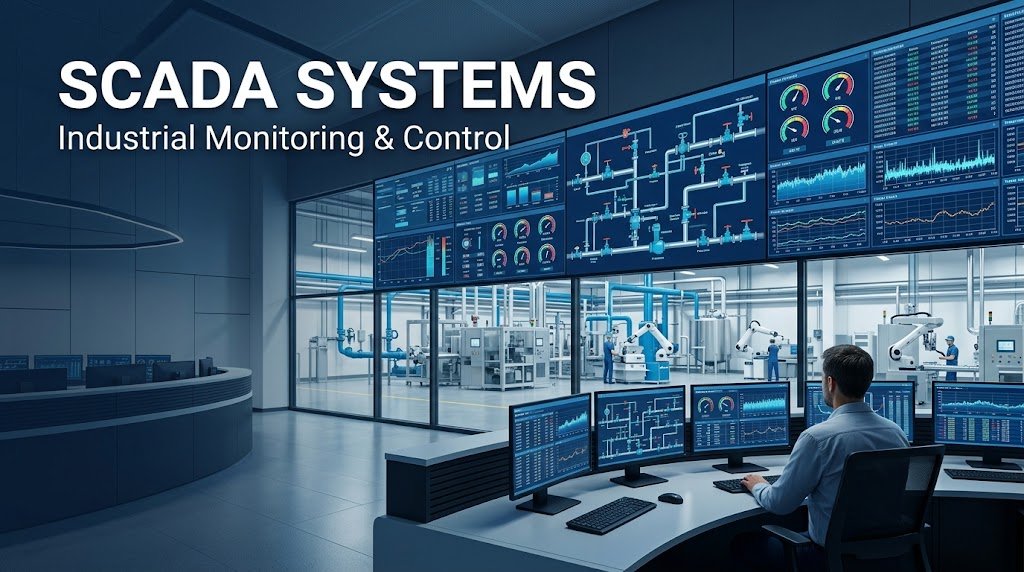
SCADA Systems: How They Work, Key Parts, and Industrial Uses
Modern industries rely on accurate information to keep machines running and production on schedule. Checking every piece of equipment manually can take time and make it difficult to notice problems early. SCADA systems help solve this challenge by allowing operators to observe industrial processes, review live data, and supervise equipment from a central location.
SCADA technology is used in many environments, including factories, electricity networks, water treatment facilities, and energy operations. Understanding how these systems work can help readers see their role in industrial monitoring and automation.
What Are SCADA Systems?
SCADA stands for Supervisory Control and Data Acquisition. It describes a technology system that collects information from equipment in the field and presents it to operators through monitoring software.
For example, a water treatment plant may need to track tank levels, pump activity, water pressure, and equipment status. A SCADA system can gather this information and display it on a computer screen. Depending on the system’s design and permissions, an operator may also be able to change settings or send commands to connected equipment.
SCADA does not replace every machine controller. Instead, it helps people supervise processes and understand what is happening across an industrial operation.
How Does a SCADA System Work?
A SCADA installation connects field equipment, communication networks, control devices, and software. These parts work together to provide operators with useful information.
1. Collecting Field Data
Sensors measure conditions such as temperature, pressure, flow rate, and liquid level. Other devices report whether a machine is operating, stopped, or experiencing a fault.
2. Sending Information
Devices such as programmable logic controllers (PLCs) and remote terminal units (RTUs) gather signals from connected equipment. They can pass this information to SCADA software through a suitable communication network.
3. Displaying Equipment Status
The software organizes incoming data into screens, diagrams, charts, and status indicators. Operators can use these displays to check equipment conditions and identify unusual readings.
4. Responding to Problems
A system can be configured to generate alarms when measurements cross defined limits or a device reports a fault. Operators can investigate the warning and follow the site’s procedures.
5. Supervising Operations
Where authorized control functions are available, an operator may send a command through the system. Safety interlocks and local control logic should remain in place to prevent unsafe actions.
Main Components of SCADA Technology
A SCADA system includes several parts, each with a different responsibility.
Human-Machine Interface (HMI)
The HMI is the screen or application through which an operator views process information. It may show equipment diagrams, current measurements, alarm messages, and historical trends.
Programmable Logic Controller (PLC)
A PLC controls machinery and industrial processes using programmed instructions. It commonly handles tasks that require dependable, repeated responses to input signals.
Remote Terminal Unit (RTU)
An RTU gathers field information and communicates with a supervisory system. RTUs are often useful when equipment is spread across large or remote areas.
Sensors and Actuators
Sensors measure physical conditions. Actuators carry out actions, such as opening a valve or moving a mechanism, when instructed by a compatible control system.
Communication Network
Wired or wireless communication links allow devices and software to exchange information. The technology used depends on distance, reliability needs, environmental conditions, and the installation’s design.
Supervisory Software and Servers
SCADA software receives and organizes data, presents operating screens, manages alarms, and may store historical records. Servers and related infrastructure support these functions according to the system’s architecture.
Where Are SCADA Systems Used?
SCADA technology supports operations in industries where equipment must be monitored across one site or several locations.
Electricity and Power Networks
Power operators can use SCADA to observe substations, review equipment status, and monitor measurements across electricity networks. This information helps staff understand changing conditions and respond to reported faults.
Water and Wastewater Facilities
Water utilities may monitor reservoirs, pumping stations, treatment processes, and pipeline measurements. Centralized visibility can help teams identify abnormal levels or equipment problems.
Manufacturing Plants
Factories can use supervisory systems to follow production equipment, monitor process conditions, and review alarms. This information may help maintenance teams investigate recurring interruptions.
Oil and Gas Operations
Pipelines, storage facilities, and processing sites may use SCADA to collect measurements from equipment located across wide areas. Monitoring can help operators recognize changes that require attention.
Buildings and Infrastructure
Some large facilities use supervisory monitoring for selected mechanical and utility systems. The exact functions depend on the installation and may overlap with building management systems.
Key Benefits of SCADA Systems
SCADA can make industrial operations easier to observe and manage, although the results depend on how well the system is designed and maintained.
- Centralized visibility: Operators can review information from multiple devices on connected screens.
- Faster fault awareness: Alarms can draw attention to conditions that need investigation.
- Better operational records: Historical data can help teams review performance and investigate incidents.
- Remote supervision: Authorized staff may monitor distant sites without visiting each location.
- More informed decisions: Current measurements and past trends provide useful context for operational choices.
- Support for maintenance: Equipment status and alarm histories may help technicians identify recurring issues.
These benefits do not happen automatically. Accurate sensors, suitable alarm settings, reliable communications, and trained staff are all important.
Challenges and Limitations
SCADA systems can be valuable, but organizations should consider their costs and operational requirements before installing one.
Initial investment: Hardware, software, networking, engineering, and commissioning can require a substantial budget.
Ongoing maintenance: Devices need testing, software needs updates, and system configurations must remain documented.
Cybersecurity risks: Poorly protected connections or outdated components can expose industrial operations to unauthorized access.
Integration difficulties: New equipment may use different communication methods or older technologies that require additional work to connect.
Training requirements: Operators and maintenance staff need to understand alarms, procedures, access permissions, and safe operation.
Dependence on communications: A network failure can interrupt visibility or data exchange, depending on the system’s design. Critical processes therefore need appropriate local controls and contingency plans.
SCADA vs. PLC: What Is the Difference?
SCADA and PLC technology often work together, but they serve different purposes.
| Feature | SCADA | PLC |
|---|---|---|
| Main role | Supervises and monitors processes | Controls machines and process steps |
| Typical interface | Operator screens and supervisory software | Programmed control logic |
| Data handling | Can collect and display information from many devices | Processes connected inputs and outputs |
| Common use | Monitoring a plant or distributed network | Running a machine, pump, or production sequence |
| Relationship | Often communicates with PLCs and RTUs | Can provide field control data to SCADA |
A PLC can operate without a SCADA system in many applications. SCADA, meanwhile, commonly gathers information from multiple controllers to give operators a broader view of the operation.
Are SCADA Systems Secure?
Security is an important consideration because these systems can support essential industrial processes. A cybersecurity incident may affect data visibility, equipment availability, or operational safety.
Organizations can reduce risks by separating industrial networks from ordinary business networks where appropriate, restricting access to authorized users, maintaining secure backups, monitoring activity, and applying tested updates. Remote access should be carefully controlled, and security changes should be evaluated to avoid disrupting critical operations.
Security measures should match the site’s risks and follow relevant industrial safety and cybersecurity practices. No single measure can eliminate every threat.
Frequently Asked Questions
What does SCADA stand for?
SCADA means Supervisory Control and Data Acquisition. It refers to systems used to gather industrial data and supervise connected processes.
Is SCADA a type of automation?
SCADA supports industrial automation by providing monitoring, alarms, data collection, and supervisory control functions. It usually works alongside controllers and other automation equipment.
Does SCADA require a PLC?
Not every SCADA installation requires a PLC specifically. Systems may use RTUs or other compatible devices, depending on the application and design.
Can SCADA work remotely?
Yes. SCADA can support monitoring across distant sites when suitable communication links and authorized access are available. Remote operation must be designed with security and safety in mind.
Is SCADA used only in factories?
No. It is also used in areas such as electricity distribution, water management, pipelines, and other infrastructure operations.
What is the main purpose of SCADA?
Its main purpose is to help operators collect process information, monitor equipment, recognize abnormal conditions, and supervise operations from a central interface.
Conclusion
SCADA systems give industrial teams a way to observe equipment and processes through connected devices and supervisory software. By bringing measurements, alarms, and operating information into one place, they can support maintenance, improve awareness, and help operators make informed decisions.
Their effectiveness depends on careful planning, dependable communications, trained personnel, and strong security practices. When these elements work together, SCADA can be an important part of a well-managed industrial operation.