
Craftsman Tools: The Complete Guide
Introduction
For nearly a century, the name Craftsman has been part of the American household vocabulary. Whether it’s a red toolbox in a garage, a socket set passed down from a father to his son, or a lawnmower parked in the yard, Craftsman has built one of the most recognizable identities in the world of tools.
Unlike premium professional brands aimed strictly at mechanics and tradespeople, Craftsman carved out a different kind of legacy — becoming the trusted, affordable choice for millions of everyday homeowners and DIYers. This guide walks through the brand’s history, ownership changes, product lineup, and what makes it a lasting name in the tool industry.
The Origins of Craftsman
The Craftsman story begins in 1927, when Sears, Roebuck and Company registered the Craftsman trademark as its in-house brand for tools. Before adopting the name, Sears had been selling tools under a different label called Fulton, but the retailer wanted something that better captured the idea of quality workmanship. According to brand history, the name itself was chosen after Sears purchased the rights to it from the Marion-Craftsman Tool Company for a modest sum.
From the very beginning, Sears did not manufacture the tools itself. Instead, Craftsman products were produced under contract by various third-party manufacturers, with Sears controlling the branding, marketing, and retail distribution. One of the most significant of these manufacturing partnerships was with Western Forge, a company Sears partnered with starting in the mid-1960s to help produce a large share of Craftsman’s hand tools.
Through the middle of the twentieth century, Craftsman expanded rapidly beyond simple hand tools. The brand introduced electric drills just a couple of years after launching, developed one of the first wrenches made from vanadium steel in the early 1930s, and moved into lawn and garden equipment with affordable lawnmowers by the mid-1930s. By the time the brand celebrated its 75th anniversary in the early 2000s, its catalog had grown to include thousands of individual products spanning hand tools, power tools, tool storage, and outdoor equipment.
Craftsman also built a reputation for durability that occasionally made headlines. One well-known story involves a U.S. Army officer using a Craftsman hammer and screwdrivers to help chip away at the Berlin Wall in 1989 — a moment that became part of brand folklore and reinforced the “built to last” image the company had cultivated for decades.
The Shift from Sears to Stanley Black & Decker
For nearly ninety years, Craftsman was synonymous with Sears. The brand was sold almost exclusively through Sears stores and catalogs, and later through Kmart following the Sears-Kmart merger. However, as Sears faced increasing financial pressure in the 2010s, the retailer began exploring ways to raise capital by selling off valuable assets — and the Craftsman brand, despite its household recognition, became one of them.
In January 2017, Sears announced a deal to sell the Craftsman brand to Stanley Black & Decker for approximately 900 million dollars, a transaction that included a mix of cash, stock, and ongoing profit-sharing arrangements. Sears retained a limited license to continue selling Craftsman-branded products in its stores for a period of time, but ownership and long-term control of the brand shifted entirely to Stanley Black & Decker.
This was not an unusual move for Stanley Black & Decker, a company with a long history of acquiring established tool brands. The company traces its own roots back to 1843, when Frederick Trent Stanley founded a small bolt and hardware manufacturing operation in Connecticut. After merging with Black & Decker in 2010, the combined company became one of the largest tool manufacturers in the world, eventually adding brands like DeWalt, Irwin, Lenox, Bostitch, and Porter-Cable to its portfolio alongside Craftsman.
Since acquiring Craftsman, Stanley Black & Decker has worked to modernize the brand, bringing a significant share of manufacturing back to the United States and expanding retail distribution well beyond Sears — Craftsman products are now widely available at Lowe’s, Ace Hardware, and Stanley’s own online storefronts, among other retailers.
What Sets Craftsman Apart
Craftsman has never tried to directly compete with premium professional brands the way companies like Snap-on or Mac Tools do. Instead, its identity has always centered on a few key strengths.
Affordability without sacrificing reliability. Craftsman built its reputation as the tool brand a working family could actually afford, without feeling like they were settling for something flimsy. For decades, this balance of price and durability was central to why the brand became a staple in American garages.
A recognizable warranty promise. Much like other major tool brands, Craftsman has long been associated with strong warranty backing on many of its hand tools, giving buyers confidence that a broken wrench or ratchet wouldn’t mean an expensive replacement out of pocket.
A broad, practical product range. Rather than focusing narrowly on one category, Craftsman spans hand tools, power tools, tool storage, outdoor power equipment, and even work wear — making it possible for a homeowner to outfit an entire garage and yard under a single trusted name.
Sentimental, generational value. Perhaps more than any competitor, Craftsman benefits from decades of emotional brand loyalty. Many buyers grew up watching a parent or grandparent use Craftsman tools, and that generational trust continues to influence purchasing decisions today.
Popular Craftsman Product Categories
Craftsman’s current lineup under Stanley Black & Decker spans a wide variety of categories, with a few standing out as customer favorites:
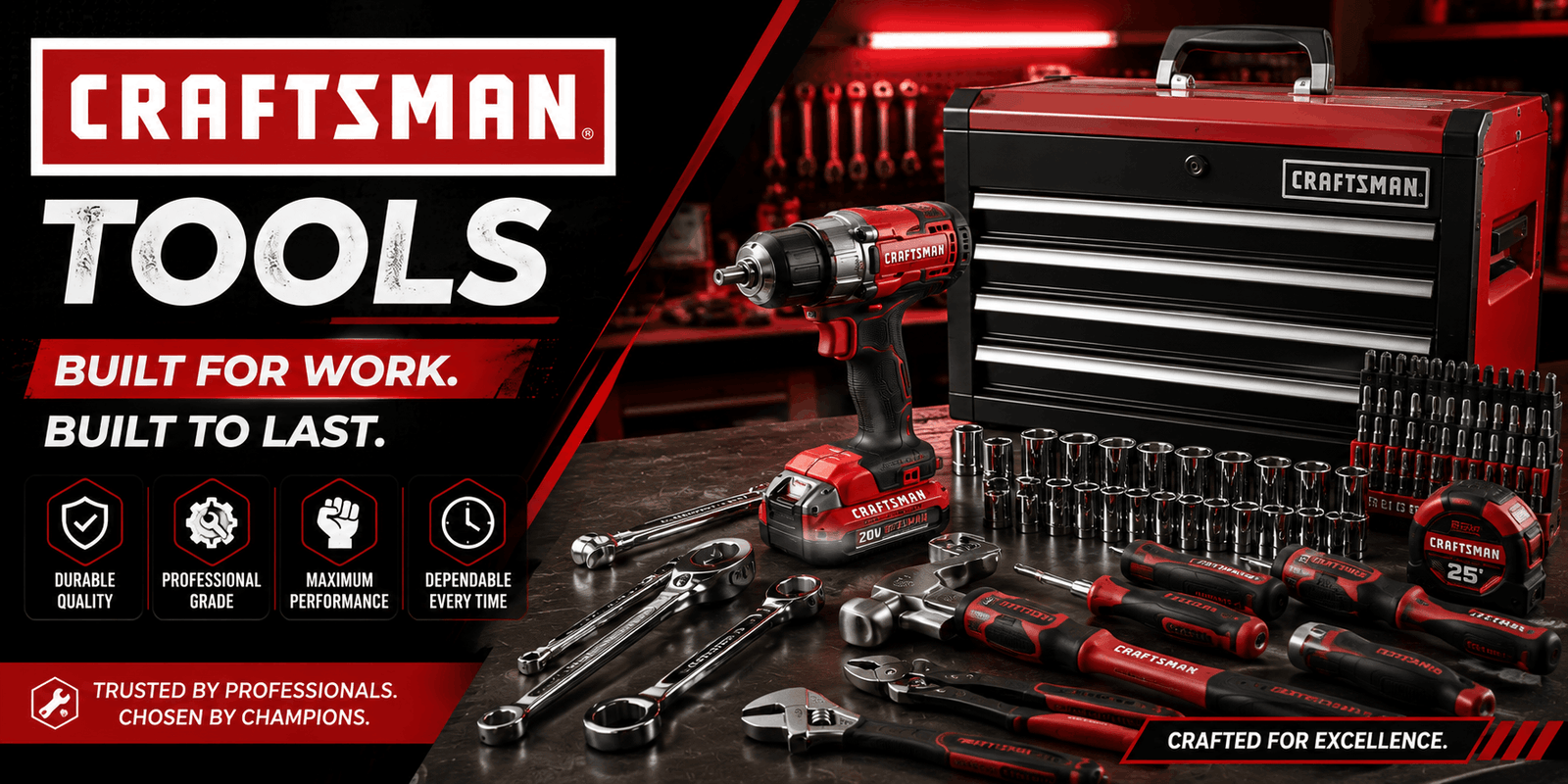
- Mechanics tool sets — combination wrenches, ratchets, and socket sets aimed at home garages and light professional use.
- Power tools — drills, saws, and impact drivers, including cordless lines built around Craftsman’s own battery platform.
- Tool storage — rolling tool chests, workbenches, and mobile workstations designed for both garage and jobsite use.
- Lawn and garden equipment — mowers, trimmers, and outdoor power tools that have been part of the Craftsman lineup since the 1930s.
- Hand tools — screwdrivers, pliers, hammers, and measuring tools that remain some of the brand’s best-selling and most recognizable products.
Craftsman vs. Other Tool Brands
Because Craftsman now sits under the same corporate umbrella as DeWalt, Stanley, and other tool lines, comparisons between these brands come up frequently. Generally speaking, DeWalt is positioned as the premium professional option within the Stanley Black & Decker portfolio, competing closely with brands like Milwaukee for jobsite-grade performance. Stanley’s own tools tend to sit in a similar affordable, DIY-focused space as Craftsman, while Craftsman retains its own distinct identity built around its long retail history and broad product range.
Compared to mobile-van professional brands like Snap-on or Mac Tools, Craftsman is priced significantly lower and is generally aimed at homeowners, hobbyists, and light-duty professional use rather than full-time mechanics working under a torque wrench eight hours a day. For most everyday household repairs, seasonal yard work, and general DIY projects, Craftsman continues to offer one of the best combinations of price, availability, and trusted performance on the market.
Final Thoughts
Few tool brands can claim the kind of cultural staying power that Craftsman has built since 1927. From its early days as a Sears house brand to its current chapter under Stanley Black & Decker, Craftsman has remained a fixture in American garages by consistently delivering dependable, affordable tools backed by strong warranty support. While the ownership behind the name has changed, the core promise — quality tools that everyday people can rely on — continues to define the brand nearly a century later.