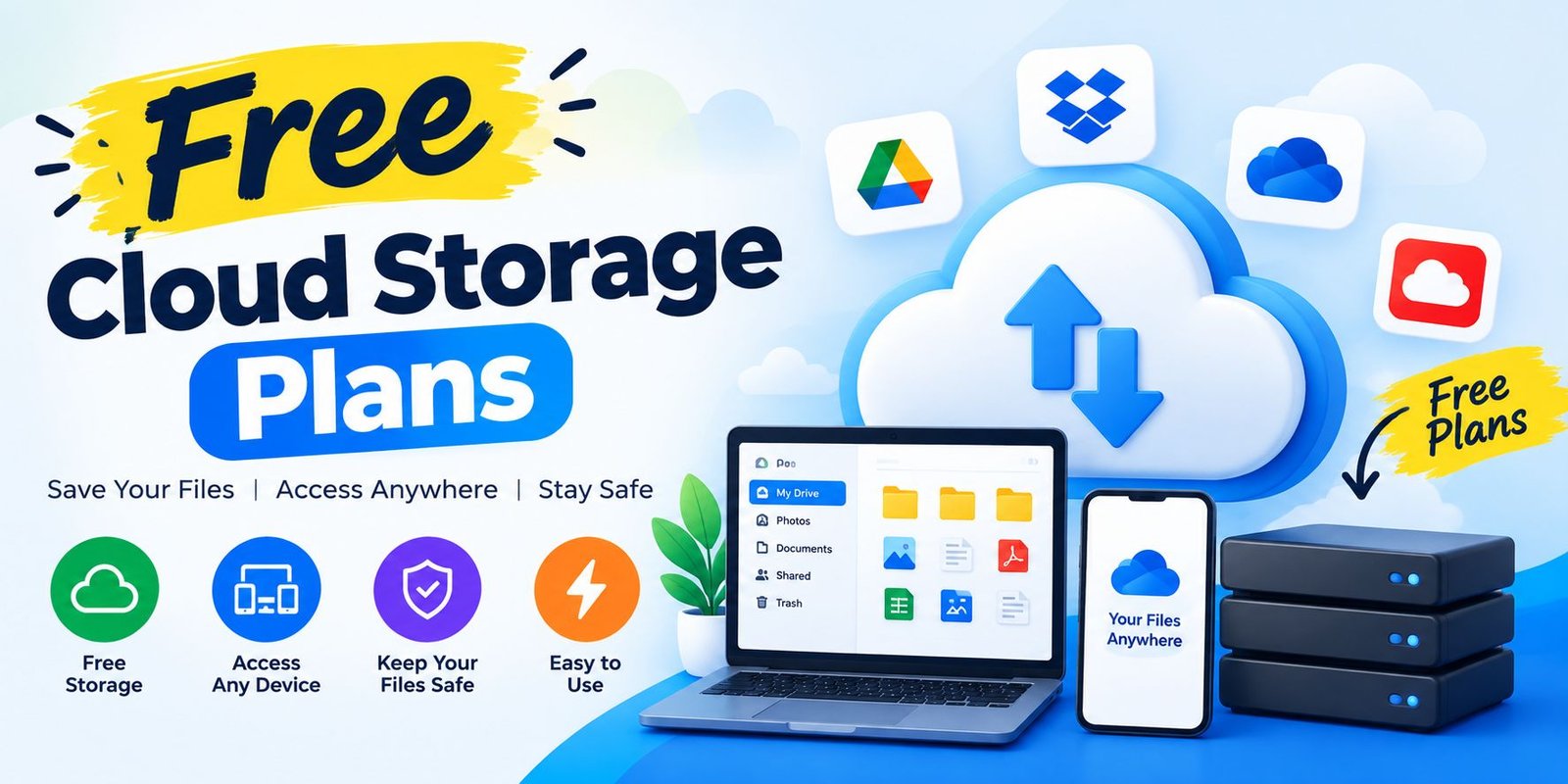
“Free Cloud Storage Plans 2026: Best Options Compared”
In today’s digital world, our photos, documents, videos, and work files pile up faster than most devices can handle. Running out of storage on your phone or laptop used to mean deleting old memories or buying an external hard drive. Now, free cloud storage has become the go-to solution — letting you back up your files online, access them from any device, and share them instantly without spending a single dollar.
But with dozens of providers all claiming to offer “the best free plan,” choosing the right one can feel overwhelming. In this guide, we’ll break down what free cloud storage actually means, how to choose the right provider, and which services are genuinely worth using in 2026.
What Is Free Cloud Storage?
Free cloud storage refers to a certain amount of online storage space that a company offers to users at no cost. Instead of keeping your files only on a local hard drive, cloud storage lets you upload data to remote servers maintained by the provider. You can then access those files from your phone, tablet, or computer, as long as you have an internet connection.
Most providers use a “freemium” model — offering a limited amount of free storage (usually between 1GB and 20GB) with the option to upgrade to a paid plan for more space and additional features like advanced sharing controls, larger file-upload limits, or priority customer support.
Why Use Cloud Storage Instead of Local Storage?
There are several clear advantages to storing files in the cloud rather than relying solely on your device:
1. Automatic Backup and Protection If your phone breaks, gets lost, or your laptop’s hard drive fails, files stored only locally can be gone forever. Cloud storage automatically keeps a backup, so your data survives even if your device doesn’t.
2. Access From Anywhere Once your files are uploaded, you can open them from any device with the right app or a web browser — whether you’re at home, at work, or traveling.
3. Easy Sharing and Collaboration Cloud storage makes it simple to share a single file or an entire folder with friends, family, or coworkers, often with a simple link. Many services also allow multiple people to edit the same document simultaneously.
4. Freeing Up Device Space Instead of letting your phone’s storage fill up with photos and videos, you can move them to the cloud and free up space for new apps and files.
Key Factors to Consider When Choosing a Free Plan
Before picking a provider, it helps to compare a few important factors:
- Storage capacity – how much free space you actually get (this varies widely, from 1GB to 20GB or more).
- File size limits – some free plans cap how large a single uploaded file can be.
- Security and encryption – look for providers offering end-to-end encryption, which ensures that even the company itself cannot read your files.
- Sync speed and reliability – how quickly files update across your devices.
- Device and platform support – whether the service works smoothly across Windows, Mac, Linux, iOS, and Android.
- Integration with other tools – some cloud storage platforms connect directly with office suites, email, or photo apps, which can be a major convenience.
Best Free Cloud Storage Providers in 2026
Here’s a breakdown of some of the most popular and reliable free cloud storage options available this year.
1. Google Drive – Best All-Around Option
Google Drive offers 15GB of free storage, shared across Gmail, Google Photos, and Drive itself. Its biggest strength is seamless integration with Google Docs, Sheets, and Slides, allowing real-time collaboration without installing any extra software. Sync speeds are generally fast, and the mobile and desktop apps are polished and reliable. The main downside is that the 15GB is shared across multiple Google services, so heavy Gmail or Photos users may find their free space filling up quickly.
2. MEGA – Most Generous Free Storage
MEGA stands out by offering a massive 20GB of free storage right from sign-up, with no credit card required. What makes MEGA particularly appealing is that this generous free tier includes the same end-to-end encryption used in its paid plans, meaning your files are encrypted before they even leave your device. The trade-off is that MEGA has historically applied temporary transfer limits for heavy downloading, though the storage allowance itself remains permanent.
3. pCloud – Best for Long-Term Growth
pCloud provides 10GB of free storage and is well known for offering one-time lifetime payment plans instead of ongoing subscriptions, which appeals to users who dislike recurring monthly fees. It offers solid encryption options, a clean interface, and strong support for storing and streaming large media files.
4. Icedrive – Clean Interface With No File-Size Limits
Icedrive also offers 10GB free and is praised for its modern, easy-to-navigate interface. Unlike some competitors, it doesn’t impose strict file-size limits on free-tier uploads, making it a good choice for users who occasionally need to upload larger files.
5. Proton Drive – Best for Privacy-Focused Users
Built by the team behind Proton Mail, Proton Drive offers 5GB of free storage with a strong focus on privacy. It uses zero-knowledge encryption and is based in Switzerland, which has strict data-protection laws. This makes it a popular choice for users who prioritize privacy above all else, even if the free storage amount is smaller than some competitors.
6. Microsoft OneDrive – Best for Windows Users
OneDrive comes with 5GB of free storage and is deeply integrated into Windows and Microsoft Office. For anyone who already uses Word, Excel, or PowerPoint regularly, OneDrive offers a smooth, built-in experience for saving and syncing documents automatically.
7. Internxt – Best Open-Source Option
Internxt offers 10GB of free storage and appeals to privacy-conscious and open-source-minded users. Its platform has been independently audited, and it emphasizes transparency in how user data is handled and protected.
Tips for Making
- Use more than one provider. Since most free plans offer limited space, spreading your files across two or three different services (for example, photos on one platform and documents on another) can significantly increase your total free storage.
- Turn on automatic photo backup. Many cloud apps offer a feature that automatically uploads new photos and videos from your phone, so you never lose memories even if your device is lost or damaged.
- Regularly clean up old files. Periodically reviewing and deleting files you no longer need helps you make the most of limited free space.
- Check encryption settings. If you’re storing sensitive documents, look for a provider that offers end-to-end or zero-knowledge encryption for extra peace of mind.
- Watch for referral bonuses. Some providers, like MEGA and pCloud, occasionally offer extra free storage for referring friends or completing simple onboarding tasks.
Final Thoughts
Free cloud storage has become an essential part of modern digital life, offering a safe, convenient way to back up files, free up device space, and access your data from anywhere. While no single free plan will meet every need, providers like Google Drive, MEGA, pCloud, and Proton Drive each offer strong options depending on whether you prioritize storage space, privacy, or integration with tools you already use.
Before committing to one provider, take a moment to think about how much storage you actually need, what kind of files you’ll be storing, and how important encryption and privacy are to you. In many cases, combining two or more free plans can give you more total space than relying on a single service — a smart, cost-free way to keep your digital life organized and protected.