
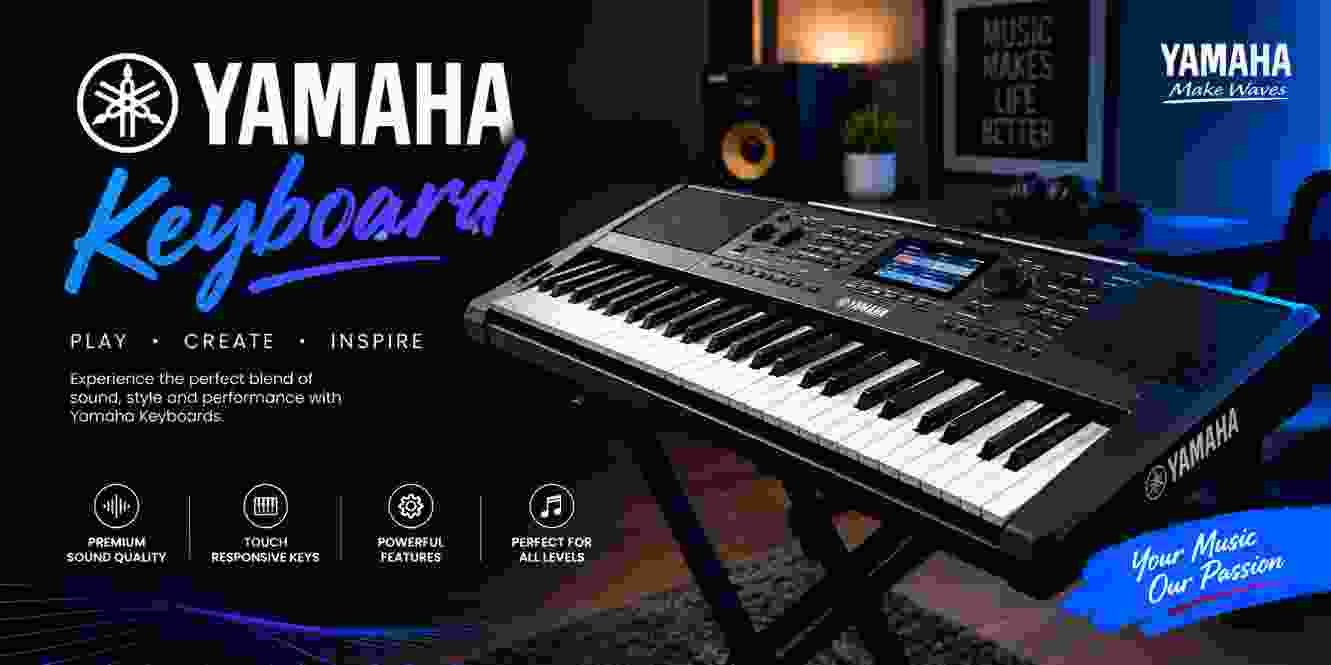
Yamaha Keyboard: Complete Guide for Beginners
Learning to play a musical instrument can be an exciting experience, but choosing the right keyboard is often the first challenge. With many models, key sizes, sounds, features, and price ranges available, beginners may not know where to start. A Yamaha Keyboard can be a practical option for people who want to learn music, practice at home, create songs, or simply enjoy playing different instrument sounds.
Yamaha offers a wide range of keyboard instruments, from compact portable keyboards to digital pianos designed for a more traditional piano experience. The best option depends on what you want to learn, how much space you have, and the type of playing experience you prefer.
What Is a Yamaha Keyboard?
A Yamaha Keyboard is an electronic musical instrument that can produce the sounds of many different instruments. Depending on the model, users may be able to play piano, organ, guitar, bass, strings, drums, and other sounds from the same instrument.
Portable Yamaha keyboards are particularly popular with beginners because they combine multiple sounds and learning features in a relatively compact design. Some models also include automatic accompaniment, recording functions, USB connectivity, headphone support, and battery operation.
For example, the Yamaha PSR-E383 is a 61-key portable keyboard designed for beginners as well as players who want a versatile instrument. Yamaha lists 650 Voices, 260 accompaniment Styles, 125 preset Songs, touch response, learning functions, and USB Audio/MIDI connectivity among its features.
Why Choose a Yamaha Keyboard?
One reason people consider Yamaha keyboards is the variety of features available across the company’s keyboard range. Instead of providing only a basic piano sound, many portable models allow players to explore different instruments, rhythms, accompaniment patterns, and learning tools.
Another important feature is touch response. On compatible models, the sound responds to how strongly you press the keys. Playing harder produces a louder sound, while playing softly produces a gentler sound. This gives beginners an opportunity to develop better control and musical expression.
Yamaha also provides keyboards with different designs and key counts, allowing users to choose an instrument according to their goals.
Yamaha Keyboard for Beginners
For someone buying a first keyboard, it is easy to focus only on the number of sounds or the appearance of the instrument. However, there are several other factors worth considering.
Yamaha recommends looking at aspects such as size, budget, sound quality, number of onboard sounds, touch response, learning functions, recording capabilities, and connectivity when choosing a first digital keyboard.
A beginner who wants to experiment with music may prefer a portable 61-key keyboard. Someone who wants to focus seriously on traditional piano technique may prefer an 88-key digital piano with weighted keys.
The choice should therefore be based on the learner’s actual goal rather than simply choosing the instrument with the largest number of features.
61 Keys vs. 88 Keys
One of the most common questions beginners have is whether they should buy a 61-key keyboard or an 88-key digital piano.
A 61-key instrument is generally more compact and can be easier to transport. It can be a good choice for casual playing, music exploration, children, beginners, and players who want automatic accompaniment and a wide selection of sounds.
An 88-key digital piano, on the other hand, provides the full range associated with a traditional piano. Many 88-key digital pianos also use weighted keys to provide a playing experience closer to an acoustic piano.
Yamaha’s beginner guidance explains that an 88-key piano is more appropriate for people focused on traditional piano learning, while a 61-key keyboard can be useful for versatility and exploration.
Important Yamaha Keyboard Features
Before purchasing a keyboard, it is useful to understand what the main features actually do.
Touch Response
Touch response makes playing more expressive. Instead of every note having approximately the same response, the keyboard reacts to the player’s touch.
For beginners, this can be helpful when developing control over volume and expression. The PSR-E383, for example, offers Soft, Medium, Hard, and Off touch-response settings.
Instrument Voices
Voices are the different instrument sounds available on the keyboard. Depending on the model, these may include piano, electric piano, organ, guitar, bass, strings, brass, drums, and more.
The PSR-E383 has 650 preset Voices, including piano and a range of other instrument sounds.
Having many Voices can make practice more enjoyable because players can experiment with different sounds without purchasing additional instruments.
Accompaniment Styles
Automatic accompaniment is another useful feature on portable keyboards. Styles can add rhythm, bass, chords, and other backing parts while you play.
The PSR-E383 includes 260 preset accompaniment Styles. Yamaha explains that these Styles can create the feeling of playing with a backing band, even when you are practicing alone.
Smart Chord
Some Yamaha keyboards include Smart Chord, which simplifies playing chords with automatic accompaniment.
On the PSR-E383, Smart Chord allows the player to use the root note of a chord to trigger accompaniment without having to play the complete chord shape. This can make experimenting with accompaniment easier for beginners.
Learning Functions
Learning tools can be particularly useful if you are studying without a private teacher.
The PSR-E383 includes a 3-Step Lesson system and Keys to Success. Yamaha describes these functions as ways to practice built-in songs progressively and focus on individual phrases or difficult sections.
These features do not replace proper musical instruction, but they can make regular practice more organized.
Built-In Songs for Practice
Having songs already available on a keyboard can make learning more interesting. Instead of repeatedly practicing scales or isolated exercises, beginners can work toward playing complete songs.
The PSR-E383 includes 125 preset Songs, and Yamaha also provides a downloadable Song Book for the built-in material.
This can be useful for learners who want structured material to practice.
Recording Your Performance
Recording can be a valuable practice tool because it allows you to listen to your playing from a different perspective.
The PSR-E383 includes a recording function that can be used to record practice performances. Yamaha notes that players can, for example, record one hand and then practice playing along with it using the other hand.
Listening back can help you notice timing problems, missed notes, or sections that need additional practice.
USB and Audio/MIDI Connectivity
Modern keyboards can also connect with computers and other devices.
The PSR-E383 includes USB TO HOST connectivity with MIDI and audio functionality. Yamaha states that the keyboard can connect to a computer for audio and MIDI use with a USB cable.
This can be useful for musicians who want to explore music-making software, recording, or digital music production.
Connectivity requirements can differ between keyboard models, so it is important to check the specifications of the exact model before purchasing cables or accessories.
Headphone Support
Practicing with headphones can be helpful when you live with other people or want to concentrate without using the keyboard’s speakers.
The PSR-E383 has a headphones/output connection, and Yamaha specifically highlights headphone use as a way to practice without disturbing others.
This simple feature can make a significant difference for people who practice in apartments, bedrooms, or shared spaces.
Battery Operation
Portability is another advantage of some Yamaha portable keyboards.
The PSR-E383 can operate using six AA batteries, in addition to its AC adapter. Yamaha says this allows the keyboard to be used in locations where mains power is unavailable.
Battery operation can be convenient for musicians who move their instrument between rooms, take it to lessons, or want to practice in different locations.
Duo Mode for Learning Together
Some Yamaha keyboards include Duo Mode, which divides the keyboard into two sections with equivalent ranges.
This can be useful when two people want to practice together. For example, a teacher can demonstrate something on one side while the student follows on the other.
The PSR-E383 includes Duo Mode as part of its features.
Effects and Sound Customization
Digital keyboards can provide effects that change the character of their sounds.
The PSR-E383 includes Reverb, Chorus, DSP effects, Harmony, and Arpeggio functions. Its specifications list 15 Reverb types, 7 Chorus types, 41 DSP types, 26 Harmony types, and 152 Arpeggio types.
For beginners, these features can simply be a fun way to experiment. More experienced players can use them to create different textures and performance styles.
Is a Yamaha Keyboard Good for Piano Learning?
A Yamaha Keyboard can be suitable for learning basic keyboard and musical skills, but the answer depends on what you mean by “learning piano.”
If your goal is to eventually play traditional acoustic piano repertoire and develop classical piano technique, an 88-key digital piano with an appropriate weighted action may be a better long-term choice.
If your goal is to explore music, learn melodies, practice chords, play different instrument sounds, accompany songs, or enjoy making music at home, a portable keyboard can provide more versatility.
Yamaha itself distinguishes between the goals of traditional piano learning and the broader exploration offered by portable keyboards.
How to Choose the Right Yamaha Keyboard
There is no single Yamaha keyboard that is perfect for every person. Consider these questions before making a decision:
What is your main goal?
Decide whether you want to learn piano, play casually, create music, accompany singers, or perform.
How many keys do you need?
A 61-key keyboard can be practical for portability and general use, while an 88-key digital piano provides the full piano range.
Do you need touch response?
If you want greater control over dynamics and expression, touch response is an important feature.
Do you want learning tools?
Beginners may benefit from built-in lessons, songs, and practice functions.
Will you connect it to a computer?
If you plan to use music software, check whether the keyboard supports the required MIDI or audio connections.
Do you need portability?
Consider dimensions, weight, power options, and battery support if you plan to move the instrument frequently.
Yamaha Keyboard Accessories You May Need
The keyboard itself is only part of the setup. Depending on the model and your needs, you may also want a stand, sustain pedal, headphones, bench, carrying case, or compatible USB cable.
A sustain pedal can be particularly useful for players who want to develop piano-style playing techniques.
Headphones are useful for quiet practice, while a suitable stand can provide a more comfortable playing position.
Always check compatibility before buying an accessory because connectors and supported accessories can vary between Yamaha models.
Yamaha Keyboard for Home Practice
A portable keyboard can be a convenient instrument for home practice because it does not require the same space as a traditional acoustic piano.
Features such as headphones, built-in lessons, recording, automatic accompaniment, and multiple Voices can make practice sessions more varied.
The most important factor, however, is consistency. Even a feature-rich keyboard cannot replace regular practice. Spending a short amount of time practicing every day can be more beneficial than occasionally having a very long practice session.
Yamaha Keyboard for Music Creation
A keyboard can also become a starting point for music creation.
Different Voices can be used to experiment with melodies, bass lines, chords, and arrangements. Automatic accompaniment Styles can provide rhythmic and harmonic ideas, while USB connectivity can allow compatible keyboards to communicate with music software.
For someone interested in songwriting or home recording, it is therefore worth checking the keyboard’s audio and MIDI capabilities before purchasing.
Common Mistakes to Avoid
Beginners sometimes choose a keyboard based only on the number of sounds. More sounds do not automatically mean the instrument is better for your needs.
Another common mistake is ignoring the key action. Someone who wants to focus seriously on piano may eventually prefer weighted keys, while someone interested in portability and versatility may value a lighter keyboard.
It is also important not to purchase accessories without checking compatibility.
Finally, avoid choosing a keyboard solely because it is popular. Your playing goals, available space, budget, and learning needs should determine which model makes sense for you.
Final Verdict
A Yamaha Keyboard can be a versatile choice for beginners, hobby musicians, students, and players who want to explore different types of music. Yamaha’s portable keyboard range includes models with touch response, multiple Voices, automatic accompaniment, learning functions, recording, connectivity, and other features designed to make playing more enjoyable.
The Yamaha PSR-E383 is one example of a feature-rich 61-key portable keyboard, offering 650 Voices, 260 Styles, 125 Songs, touch response, learning functions, USB Audio/MIDI, Duo Mode, and battery operation.
However, the best instrument depends on your individual needs. If you are mainly interested in traditional piano technique, consider an 88-key digital piano with weighted keys. If you want portability, variety, automatic accompaniment, and interactive learning features, a portable keyboard may be a better match.
Before buying, compare the key count, action, Voices, Styles, learning features, connectivity, portability, and accessories. Taking a few minutes to understand these features can help you choose an instrument that supports your musical goals for years to come.




One Comment